

Shopify Localization: How Ecommerce Brands Expand to Europe
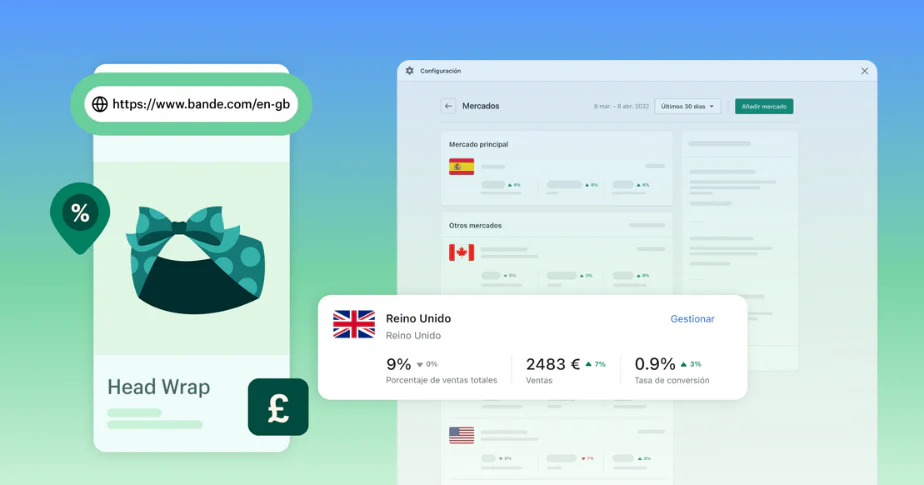
International demand does not automatically create an international business. An ecommerce brand can receive visits and orders from Europe while its store still presents U.S. pricing, long-distance fulfillment, generic shipping information and an experience built around American customers.
Shopify localization closes that gap. It allows a brand to adapt currencies, languages, domains, catalog availability, duties, shipping and content for different markets while maintaining one ecommerce operation.
FORTUNE used this approach while helping Elephantito, a children’s footwear brand, turn an inventory and regulatory problem into a European market-entry initiative. The work combined Shopify infrastructure, multilingual ecommerce, search engine optimization, Google Ads and Meta Ads.
What Shopify localization means
Shopify localization is the process of adapting a store for the commercial and cultural expectations of each market. Translation is one part of it, but a useful localized experience also accounts for currency, pricing, products, shipping, taxes, duties, domains and regional search behavior.
Shopify Markets gives brands a central system for managing those differences. A company can maintain one store while presenting different storefront experiences to customers in France, Germany, the United Kingdom and other European markets.
2026 platform note: Shopify’s current Markets documentation describes market customizations for currency, language, pricing, theme content, product availability, domains and taxes. Shopify’s localization guidance also recommends visible country and language selectors because automatic geolocation can be wrong. These platform capabilities do not replace operational planning for inventory, fulfillment, returns or customer service.
A localized market can include:
- Prices in EUR or GBP rather than USD
- Translated navigation, product information and policies
- Market-specific domains or subfolders
- Regional product availability and pricing
- Local shipping rates and delivery expectations
- Tax and duty settings suited to the destination
- SEO metadata and landing pages written for regional search demand
The Elephantito Europe market-entry story
Elephantito had shoes in the United States that could not be sold there because testing identified lead levels above the applicable U.S. limit. The inventory still had commercial value, and European regulations created a different route to market.
FORTUNE proposed moving the eligible inventory to Europe and building the digital infrastructure needed to sell it there. This was not simply a translation project. The initiative required a storefront, payment and ecommerce experience that European customers could use with confidence.
We configured the regional Shopify structure, developed localized market experiences and aligned the store with European currencies, languages and fulfillment. We then supported demand through Google Ads, Meta Ads and SEO in markets where the brand had not traditionally sold at scale.
The project demonstrates what localization can do when it is connected to a real operational decision. Shopify was the commercial infrastructure, while search and paid media created routes into a new market.
Structuring European markets in Shopify
Europe should not be treated as one uniform audience. Language, currency, buying behavior and search demand vary across countries. The right market structure depends on where demand exists, how fulfillment works and whether the brand can support market-specific content.
For this initiative, the store included distinct experiences for France, Germany, the United Kingdom and the rest of Europe. Customers could reach a storefront that reflected their location rather than navigating a U.S.-only buying journey.
France
The French market required translated navigation, product information and supporting content. French-language ecommerce copy also created a foundation for search visibility beyond branded terms.
Germany
German localization gave one of the largest European ecommerce markets a clearer buying experience. Translation quality mattered because awkward automated copy would weaken trust in a category where fit, materials and product details influence the purchase.
United Kingdom
The UK market required GBP pricing and market-specific shipping information. English content reduced the translation burden, but the commercial configuration still needed to reflect a distinct currency, tax environment and customer journey.
Rest of Europe
An English-language European experience supported countries where a fully translated storefront was not yet justified. This gave the brand wider reach without creating a collection of thin country sites.
Currency, pricing and product availability
Currency conversion alone does not produce a sound international pricing strategy. Exchange-rate movement, taxes, duties, fulfillment costs and expected price points can change the economics of a market.
Shopify Markets allows brands to set regional currencies, rounding rules and price adjustments. Product catalogs can also vary by market, which matters when inventory, regulations or distribution rights differ by region.
In Elephantito’s case, regional availability was central to the project. The European storefront needed to sell the appropriate inventory without creating confusion for U.S. customers.
International SEO for localized Shopify stores
Localization creates an SEO opportunity only when search engines can understand the relationship between each regional version. The technical setup should give every important market a clear, crawlable URL and connect alternate versions correctly.
The work can include:
- Country or language subfolders with consistent URL structures
- Hreflang signals between alternate language and regional pages
- Self-referencing canonical tags on valid localized pages
- Translated titles, descriptions, headings and product content
- Internal links that stay within the visitor’s regional experience
- Localized collection pages based on how customers search in each language
- Sitemaps that expose indexable market URLs without unnecessary duplicates
FORTUNE’s earlier collection-page SEO work also helped Elephantito rank for hundreds of additional keywords. The Elephantito SEO case study explains that part of the work in more detail.
Paid media after localization
A localized store improves the destination, but a brand entering a new market still needs a way to reach customers. Google Ads captured active product demand, while Meta Ads introduced the brand through visual and audience-led campaigns.
The landing experience and campaign geography had to agree. Sending a customer in France to U.S. pricing or generic international shipping would waste media spend and weaken trust. Regional storefronts allowed campaigns to direct each audience to the correct commercial experience.
When Shopify localization is commercially justified
Not every international visitor deserves a dedicated market. Localization becomes more useful when a brand sees repeat demand, has a workable fulfillment model and can maintain the experience after launch.
Useful signals include:
- Meaningful traffic or orders from a specific country
- High international shipping costs or slow delivery
- A regional warehouse, distributor or inventory opportunity
- Search demand for the product category in another language
- Customer-service questions about currency, duties or delivery
- Paid-media performance that is limited by an unsuitable storefront
The strongest projects connect localization to operations, demand and margin. A translated storefront without appropriate inventory or fulfillment will not solve the underlying commercial problem.
How localization differs from translation
Translation changes language. Localization changes the buying experience for a specific market. A translated product page may still show the wrong currency, unfamiliar sizing, unclear delivery dates or payment methods that local customers rarely use.
Effective localization connects language with merchandising, pricing, fulfillment, returns, search demand and customer support. The storefront should answer the practical questions that influence trust in each market. That work often requires coordination across Shopify configuration, website design, operations and marketing.
A European market-entry checklist
- Product eligibility: confirm that the products can be sold in each destination and that labeling, materials and documentation meet local requirements.
- Fulfillment and returns: define inventory locations, delivery windows, shipping costs and a workable return process.
- Currency and pricing: set market-specific currencies and review whether taxes, duties and shipping affect the final price.
- Taxes and duties: decide how charges will be calculated and explain them before checkout.
- Payment methods: offer methods that customers in the target market know and trust.
- Domains and language: choose a clear URL structure, map languages to the correct markets and check hreflang implementation.
- Search demand: research how customers describe the product in each language instead of translating U.S. keywords literally.
- Measurement: configure analytics so performance can be compared by country, language and market.
The order matters. Marketing cannot compensate for a store that creates uncertainty about delivery, payment or returns. FORTUNE Marketing’s methodology starts with the commercial constraint and connects the site, search and media work around it.
What to measure after launch
A localized store should be evaluated market by market. Aggregate revenue can hide a checkout problem or an acquisition channel that only works in one country. Useful measures include:
- conversion rate and revenue by market;
- checkout abandonment by currency and payment method;
- organic landing-page growth by country and language;
- paid acquisition cost and return by country;
- delivery, return and customer-support patterns; and
- the share of international visitors reaching the correct regional experience.
Review these measures together. Weak conversion may come from traffic quality, but it may also reveal pricing, fulfillment or trust problems that need to be fixed before the next campaign. The same principle applies to paid advertising: regional performance should guide where the next budget goes.
A unified brand with regional relevance
International expansion does not require a collection of disconnected websites. A localized Shopify structure can preserve the brand’s visual identity and central operations while adapting the details that affect trust and conversion.
For design-led ecommerce companies, that balance matters. The regional experience should feel as considered as the product, packaging and brand itself.
FORTUNE Marketing works with design-led brands on Shopify localization, international SEO, paid media and market-entry strategy. Related capabilities include fashion ecommerce SEO, paid media and design and branding.