

SEO for Interior Designers Without Losing Your Voice
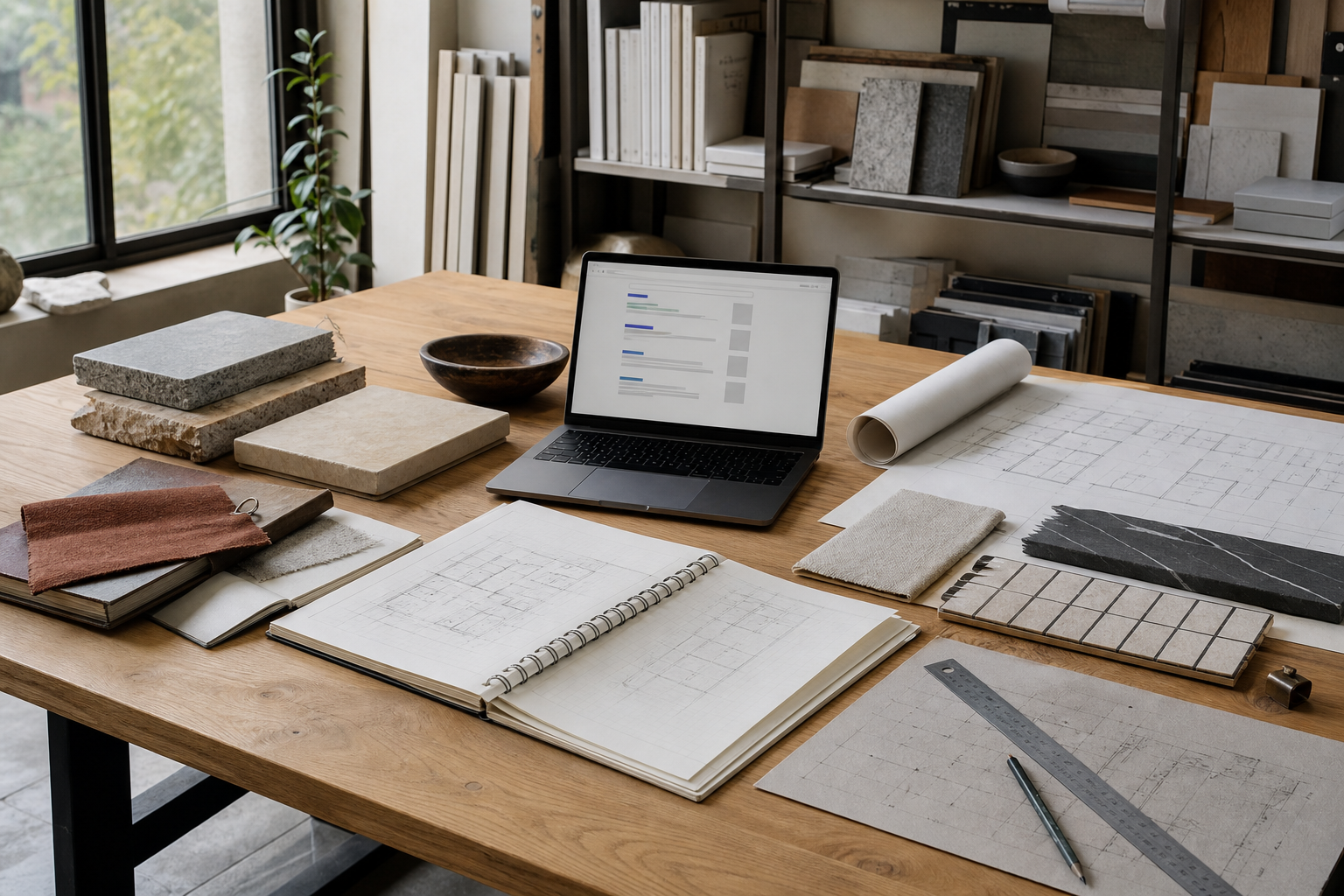
SEO for interior designers often creates a valid tension. The work is nuanced, while search language can feel blunt. A studio speaks about spatial flow, material honesty and context. A prospective client types “interior designer in Madrid” or “boutique hotel interior design.”
Good SEO for interior designers connects those two languages. It helps the right client discover the studio without flattening its point of view into generic copy.
The goal: build a clear search architecture around services, sectors, locations and expertise, then fill it with first-hand project knowledge that only your studio can provide.
Why SEO for Interior Designers Needs More Than a Portfolio
Images can prove taste, but search engines and prospective clients need context. A project page titled “Casa A” with twelve photographs reveals little about location, scope, constraints or outcome.
That missing context also weakens the sales process. The right client wants to know whether the studio has solved a comparable problem, worked in a relevant building type and understands the scale of the commission.
Keep the visual restraint. Add useful language around it.
Map Keywords to the Way Clients Hire
Do not chase one broad phrase such as “interior design.” Build clusters around real decisions:
- Service: residential interior designer, hospitality interior design, interior renovation.
- Location: interior designer in Madrid, Barcelona hospitality design studio.
- Property: boutique hotel designer, restaurant interior design, historic apartment renovation.
- Problem: small hotel lobby design, sustainable material specification, adaptive reuse interiors.
- Proof: project case studies, process pages, fees, timelines and planning guidance.
Each cluster needs a distinct page or useful section. Forcing every phrase onto the homepage makes the copy repetitive and the site harder to understand.
Create a Clear Site Architecture
A focused studio website can stay elegant with a simple structure:
- Homepage with positioning, sectors and selected proof.
- One page for each commercially important service.
- Sector pages for residential, hospitality, retail or workplace when relevant.
- Project case studies linked to those services and sectors.
- Studio page with philosophy, team, process and credentials.
- Journal pages that answer deeper client questions.
Our website design and SEO work treats architecture as a joint brand and search decision.
Turn Projects Into Searchable Case Studies
A strong case study does not need to sound corporate. It needs to answer five questions:
- What was the context?
- What did the client need?
- What constrained the design?
- What decisions shaped the result?
- What changed after completion?
Use a specific title such as “A Limewash and Oak Renovation for a Madrid Apartment” instead of a project code alone. Keep the studio’s preferred name visible, but add a descriptive subtitle and URL.

Write With Specificity, Not Keyword Repetition
Search-friendly copy should sound more precise, not more mechanical. Name the building type, location, materials, decisions and tradeoffs. Explain why the team chose one approach over another.
That specificity naturally introduces relevant language. It also demonstrates experience, which generic trend commentary cannot do.
Google recommends creating helpful, people-first content with clear first-hand expertise. Project stories give a design studio a direct way to meet that standard.
Use Images as Search Assets
Interior design sites depend on visual discovery. Optimize the library without turning captions into keyword lists.
- Rename files with concise descriptions.
- Write alt text that states what the image shows.
- Place images near relevant project copy.
- Compress large photographs while preserving quality.
- Credit the photographer consistently.
- Use captions when material, room or context helps the reader.
A coordinated project photography brief should include both editorial coverage and the factual images needed for service and case-study pages.
Build Local Visibility With Real Evidence
Local SEO matters when clients search for a studio in a city or region. Keep the studio name, address and contact details consistent. Complete the Google Business Profile, request thoughtful reviews and publish projects that show genuine work in the market.
Do not create dozens of near-identical city pages. A studio earns stronger local relevance through real projects, local press, partnerships and useful knowledge.
Choose Journal Topics From Client Friction
The best editorial calendar starts with questions that delay a commission:
- How much should I budget for interior design?
- What happens during the design process?
- How long does a hotel renovation take?
- What does an interior designer specify?
- How do we renovate a listed or historic property?
- When should we appoint the designer?
Answer the question directly, then add the studio’s perspective. The useful answer attracts search demand. The point of view helps the right client self-select.
Measure Qualified Visibility
Traffic alone can mislead a high-value design studio. Track:
- visibility for service, sector and location terms
- organic visits to project and service pages
- inquiries that match budget, sector and geography
- assisted conversions from journal content
- press links, project citations and image discovery
A smaller number of qualified inquiries can matter more than a large wave of inspiration traffic.
Frequently Asked Questions
How long does SEO take for an interior design studio?
Technical and page improvements can appear quickly, but meaningful organic growth often takes three to nine months. Competition, location, authority and publishing consistency affect the timeline.
Should every project have its own page?
Give each substantial, distinct project a page when you have enough images and context. Group smaller work only when separate pages would feel thin or repetitive.
Can an image-led website rank well?
Yes, when the site also provides clear structure, descriptive project context, useful alt text, fast performance and strong internal links. Visual restraint does not require informational silence.
Let Search Clarify the Studio
SEO for interior designers works when it translates expertise without diluting it. The process should make the studio’s services, sectors and value clearer to clients and search engines at the same time.
If your portfolio earns admiration but not enough qualified inquiries, contact FORTUNE Marketing to build a search strategy around the way your studio actually works.