

Hotel Social Media Strategy for Boutique Properties
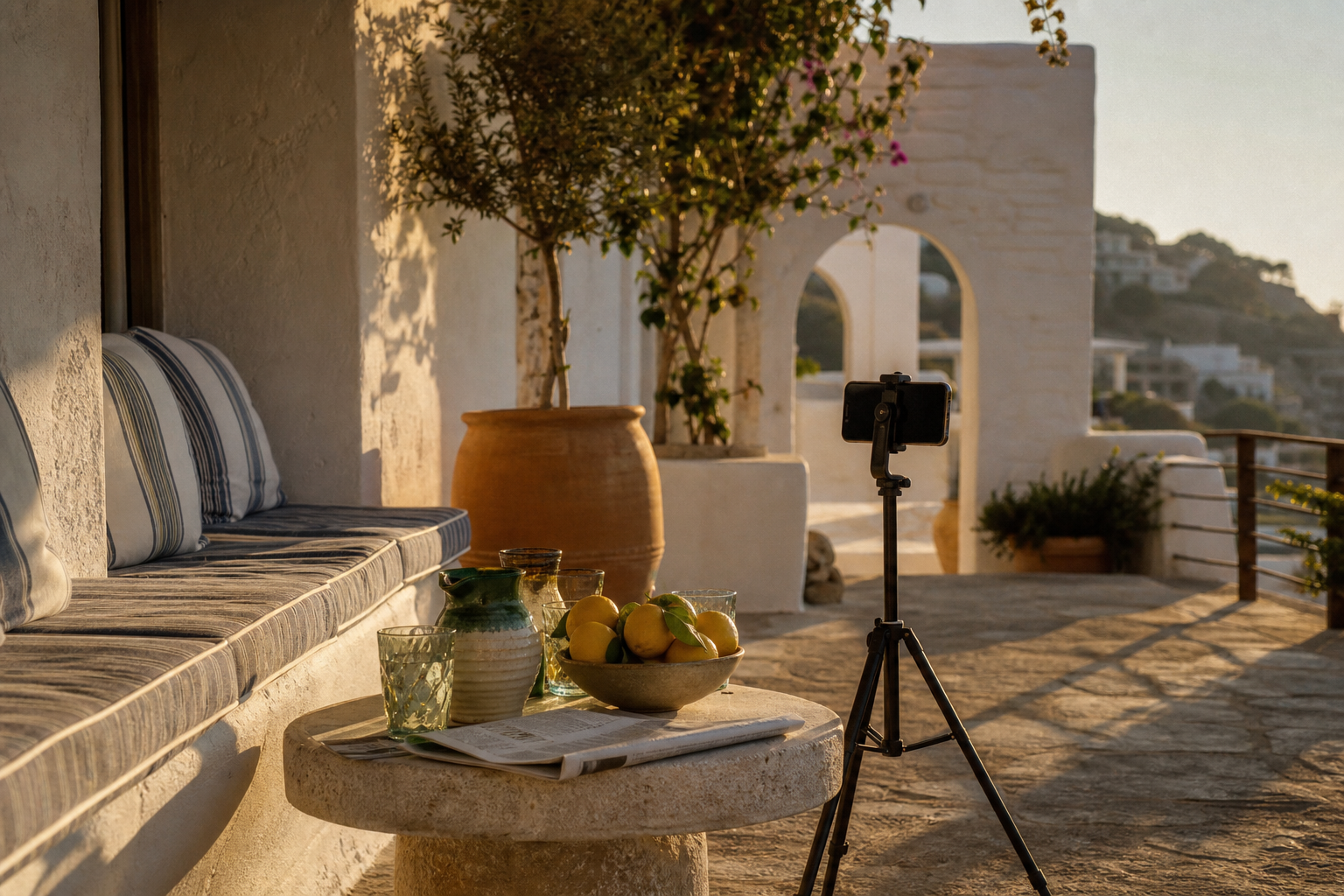
A guest should be able to feel the hotel before they can name every room type. Social media can create that sense of recognition, but only when the content has a consistent point of view.
A strong hotel social media strategy turns spaces, rituals, people and place into repeatable stories. It does not depend on daily inspiration or a feed filled with empty-room photographs.
The approach: define the atmosphere, build four or five recurring series, produce around the real hotel calendar and connect discovery to useful booking paths.
Stop Treating the Feed Like a Brochure
A brochure presents finished facts. Social content earns attention through movement, sequence and a sense of access. The audience wants to see what changes during the day, who shapes the experience and what they might notice after arrival.
Keep the essential room and amenity posts. Then give them context. Show the curtain opening, the breakfast tray crossing the courtyard or the bartender choosing a garnish. Small actions make design feel inhabited.
Define the Feeling in Observable Terms
Words such as “luxury,” “authentic” and “unique” cannot guide a shoot on their own. Translate the brand into details the team can capture.
- Quiet: soft morning sound, uncluttered frames, slow camera movement.
- Local: named makers, short walks, ingredients, architecture and staff recommendations.
- Playful: quick edits, unexpected details, staff personality and guest rituals.
- Restorative: light, water, sleep, space and transitions between busy and calm moments.
These cues create consistency without forcing every post into the same color preset.
Build Five Repeatable Content Series
1. The room at one hour
Return to the same room or public space at a recognizable time. Morning light, afternoon shade and evening turn-down each reveal a different use.
2. The detail with a reason
Feature a chair, tile, artwork or amenity, then explain who made it and why it belongs. Design becomes more memorable when the audience understands the decision.
3. Three hours nearby
Create a short itinerary from the front door. Include one cultural stop, one place to eat and one unexpected detail. This format supports saves, shares and destination authority.
4. The people behind the stay
Ask a chef, housekeeper, designer, concierge or neighbor one specific question. Avoid scripted brand statements. Their knowledge is the story.
5. Before the guest arrives
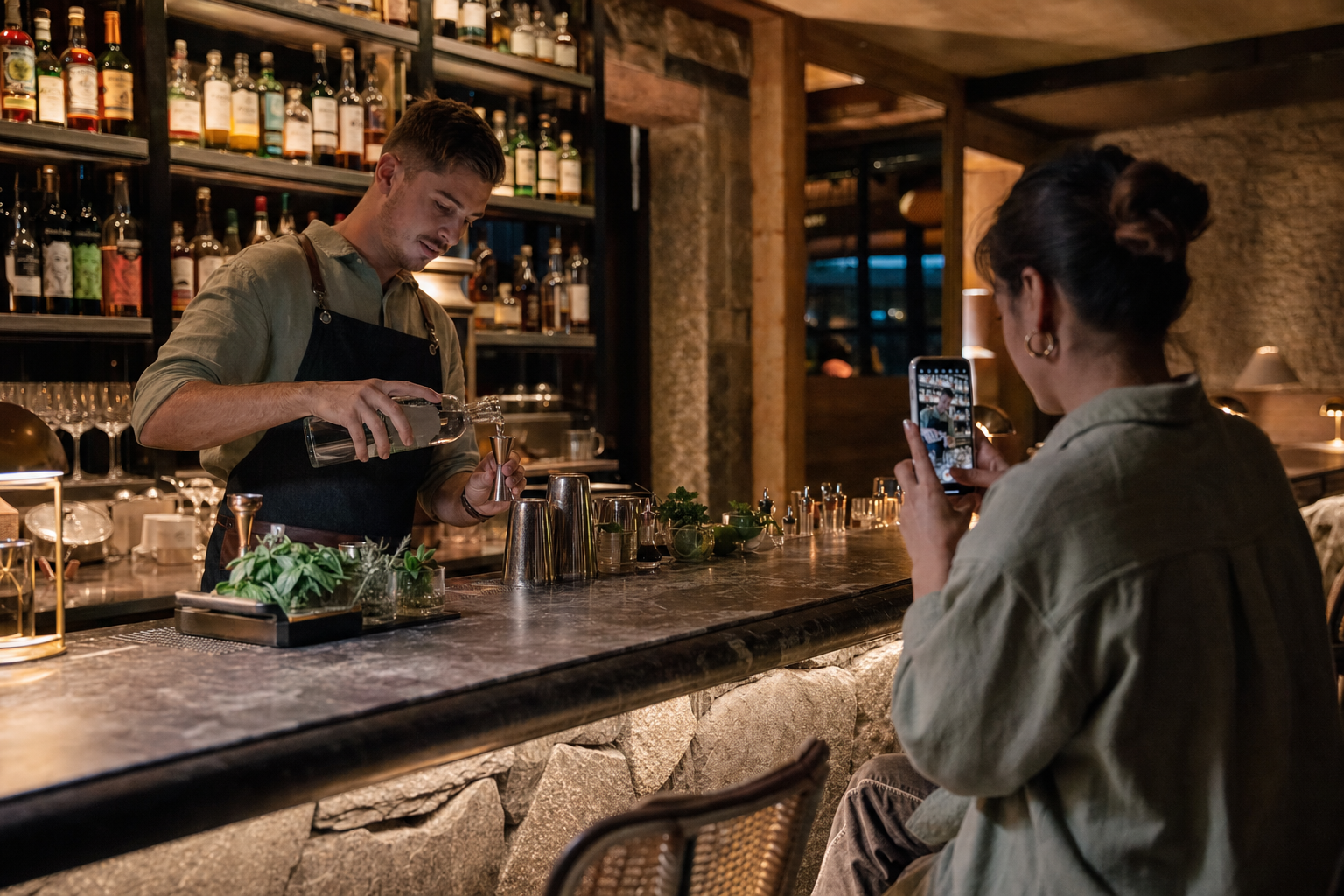
Show the real preparation behind a ritual. Fresh flowers, pool setup, bread delivery or a playlist test can communicate care without announcing it.
Choose Platforms by Behavior
Instagram can hold the visual brand and support direct conversation. TikTok can introduce personality, useful travel knowledge and informal discovery. Pinterest can extend the life of design and destination content. LinkedIn can tell the business, design and partnership story.
You do not need equal volume on every platform. Adapt a strong idea to the way each audience uses the channel. Tripadvisor’s guide to hotel social media strategy also recommends choosing platforms, goals and metrics intentionally.
Plan Production Around Hotel Operations
A social plan fails when it ignores the property’s rhythm. Build a monthly production map with operations, food and beverage, sales and guest experience.
- Mark seasonal light and landscape changes.
- Schedule room access around occupancy.
- Pair menu changes with food and team stories.
- Prepare releases for staff, creators and guests.
- Capture vertical video during every photography day.
- Store assets by location, ritual, season and usage rights.
A coordinated video system can turn one production day into months of useful short-form material.
Use Creators for Perspective, Not Reach Alone
The best creator is not always the largest account. Look for a credible relationship with design, food, architecture or the destination. Review how the creator observes places, speaks to the audience and handles commercial work.
Brief the stay around a point of view, not a rigid shot list. Set the required facts, usage rights and deliverables. Then leave room for the creator to notice what the hotel team no longer sees.
Our creator partnership approach evaluates fit, audience and content value together.
Connect Social Discovery to Booking
Do not send every post to the homepage. Link a room tour to the room page, a neighborhood reel to the guide and a seasonal ritual to a relevant offer.
Keep mobile landing pages fast. Match the image and language from the post so the transition feels continuous. Use campaign tracking to understand which stories start or assist bookings.
Build a Monthly Editorial Rhythm
A realistic month for a boutique property might include:
- four room or design stories
- four ritual or service stories
- three destination guides or recommendations
- two team or maker features
- two timely offer or event posts
- one creator collaboration
Use Stories and short updates for immediacy. Use the main feed for ideas that should remain useful. A professional social media marketing system should protect quality while keeping the cadence sustainable.
Measure Signals That Support Revenue
Track saves, shares and completion rate because they show content value. Then connect them to website sessions, room-page visits, email signups, booking-engine starts and assisted revenue.
Review performance by content series. If local itineraries earn strong saves but weak clicks, they may still build early discovery. If room tours drive booking starts, produce more and test clearer calls to action.
Common Hotel Social Media Mistakes
- Posting only wide, empty spaces.
- Copying trends that conflict with the hotel’s tone.
- Using creators without clear rights or audience fit.
- Launching offers without dedicated landing pages.
- Measuring follower growth without booking behavior.
- Editing every surface until the property no longer looks real.
Frequently Asked Questions
How often should a boutique hotel post?
Start with two or three strong feed posts each week and a sustainable Story cadence. Increase volume only when the team can maintain quality and respond to the audience.
Which social platform is best for hotels?
Instagram remains useful for visual identity and conversation. TikTok supports discovery and personality. Pinterest can extend design-led content. Choose based on the guest and the team’s production strengths.
Can social media drive direct bookings?
Yes, especially through remarketing, room content, creator trust and timely offers. Track assisted conversions because social often influences a booking before the final visit.
Build a Feed Guests Can Feel
The strongest hotel social media strategy makes a property recognizable through repeated details and useful stories. It gives the audience a reason to remember the hotel before they are ready to book.
If your feed looks polished but interchangeable, contact FORTUNE Marketing to build a content system around the real character of the stay.