

Refreshing BigStuf’s Website Without Starting Over
A full website redesign is not always the smartest answer. Sometimes the brand still works, the content still matters and the platform still does its job. The problem is that the experience around those assets has become inconsistent, dated or difficult to manage.
That was the situation facing BigStuf, a youth organization that has served groups since 1988. BigStuf already had a recognizable visual identity, years of useful evergreen content and a functioning Webflow website. It did not need to abandon that foundation. It needed a more focused, polished and search-ready version of the site it already owned.
Over several months, FORTUNE Marketing refreshed BigStuf’s highest-priority pages and the systems connecting them. The primary build is complete, with final refinements and performance monitoring continuing as search engines recrawl the site and BigStuf prepares its 2027 program details.
The work shows what a strategic website refresh can accomplish when a complete redesign is not the right operational or budget decision.
The difference between a website refresh and a redesign
A redesign often changes the visual identity, page system, underlying technology or information architecture at a fundamental level. A refresh works more selectively. It identifies the parts of the existing website that still have value, preserves them and improves the areas creating friction.
For BigStuf, the existing brand had real equity. The website already contained important information for youth pastors, parents, students, interns and church groups. Starting again would have created unnecessary cost, content risk and operational disruption.
The stronger approach was to preserve the best existing assets while improving page hierarchy, typography, photography, mobile behavior, navigation, conversion paths and technical SEO.
The challenge inside the existing site
BigStuf’s Webflow site had grown over several years. That growth created a common set of maintenance problems:
- priority pages used inconsistent layouts and typography;
- headers and footers varied across the site;
- some pages relied on outdated or repetitive imagery;
- dense information was difficult to scan;
- older links and utility pages remained in the wider site structure;
- mobile layouts contained spacing and overflow problems;
- important audiences did not always have a clear next step;
- search and paid-media work needed more focused landing-page intent.
The project also had a firm accuracy constraint. BigStuf had not finalized its official 2027 dates, pricing, deposits, availability or registration details. The refresh could improve evergreen planning journeys and create routes into official updates, but it could not publish or imply information the organization had not confirmed.
That constraint shaped the strategy. The new system needed to be useful now and easy to update later.
Refreshing the pages that mattered most
FORTUNE Marketing began with the pages carrying the greatest audience and operational value. The homepage was reorganized around immediate category clarity, and the About page became a more complete brand narrative covering BigStuf’s beliefs, program philosophy, history and leadership.
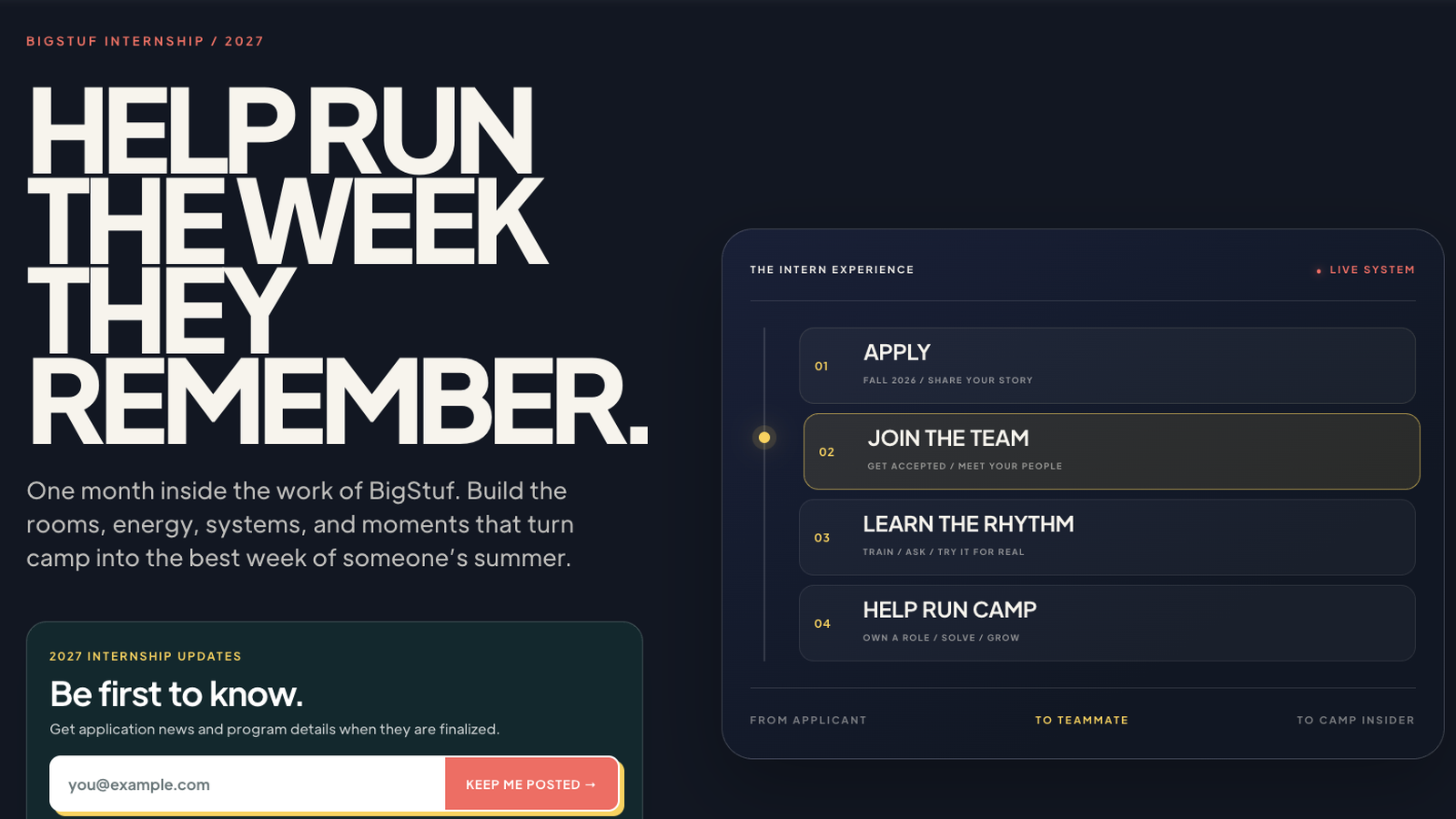
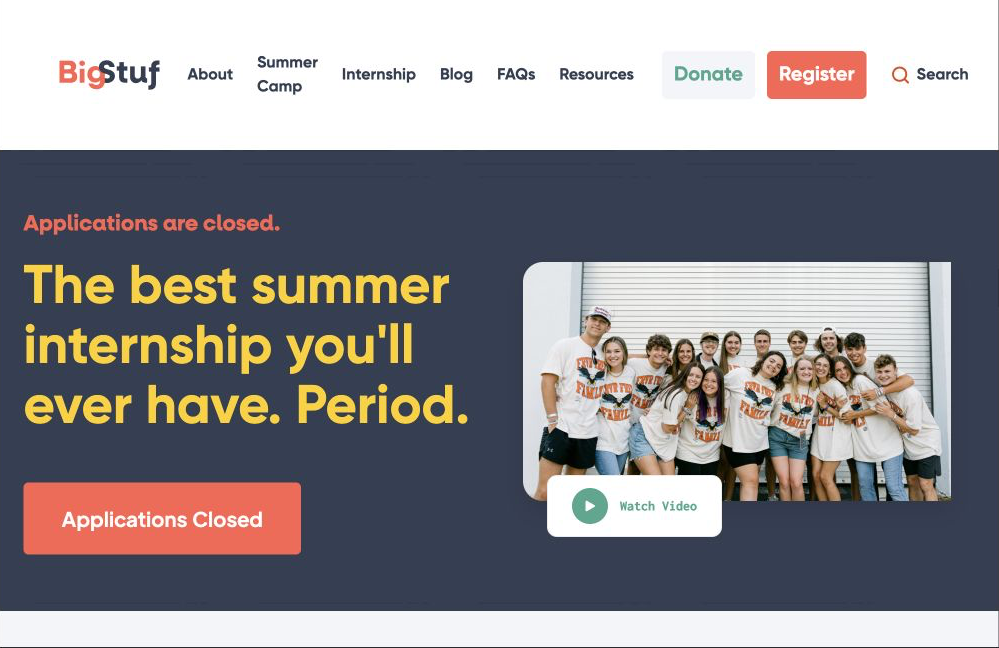
The Internship page became the strongest example of the new system. It turned a loose collection of program details into a clear journey from interest and application through training, responsibilities and the experience itself.
Internship page refresh
The new direction explains the experience, application path and role of an intern as one connected journey.
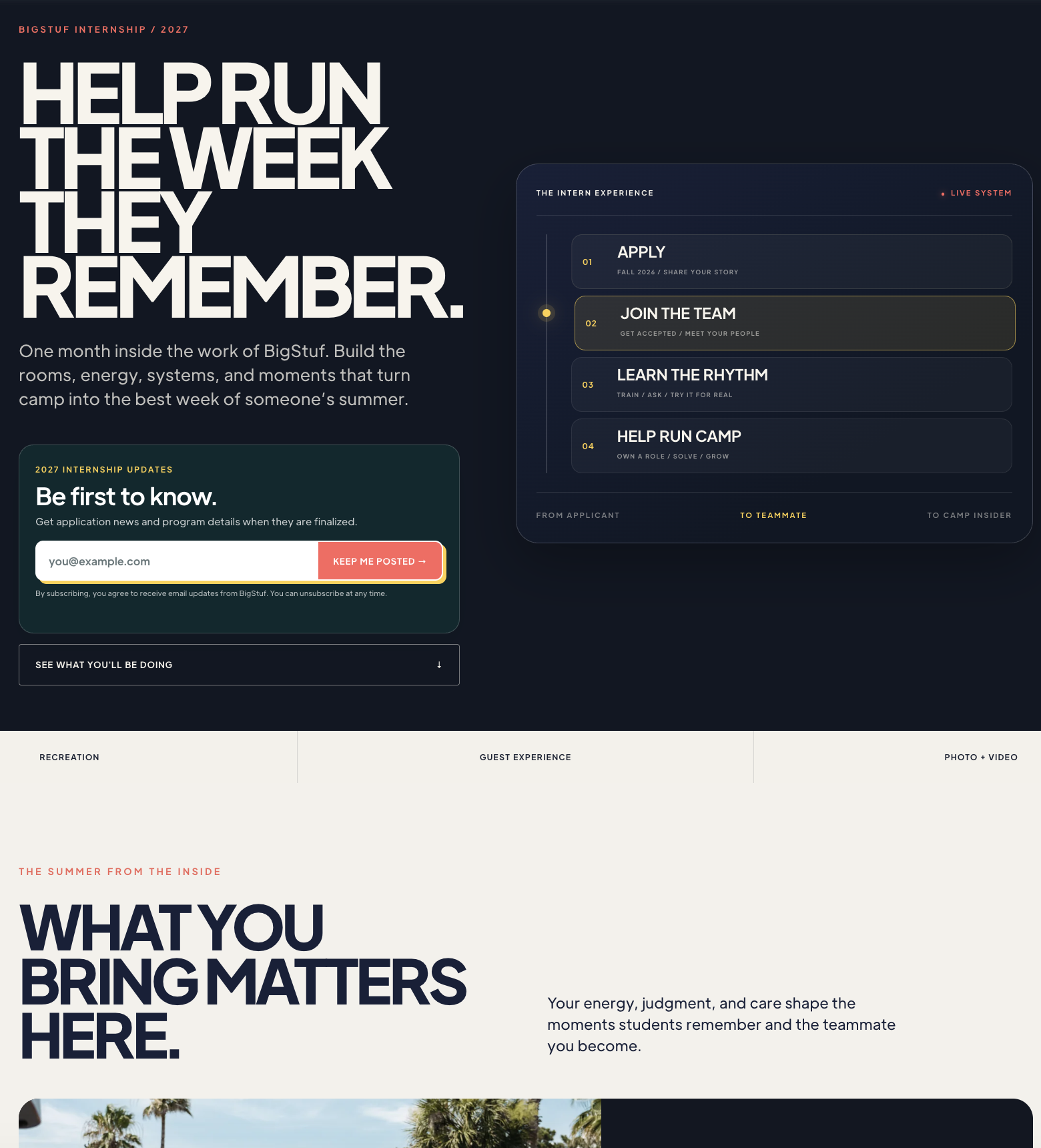
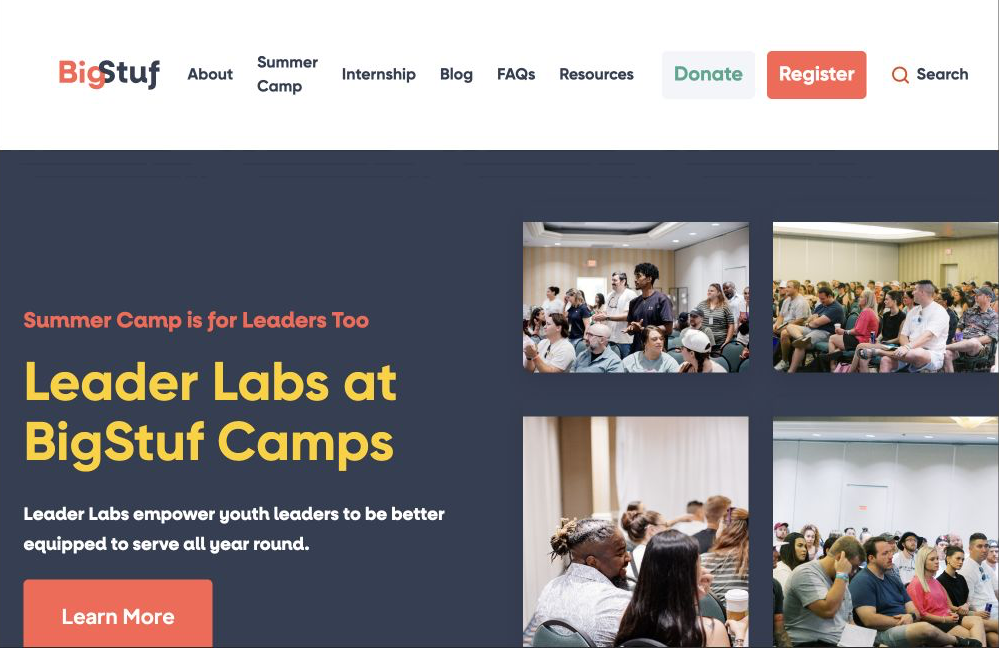
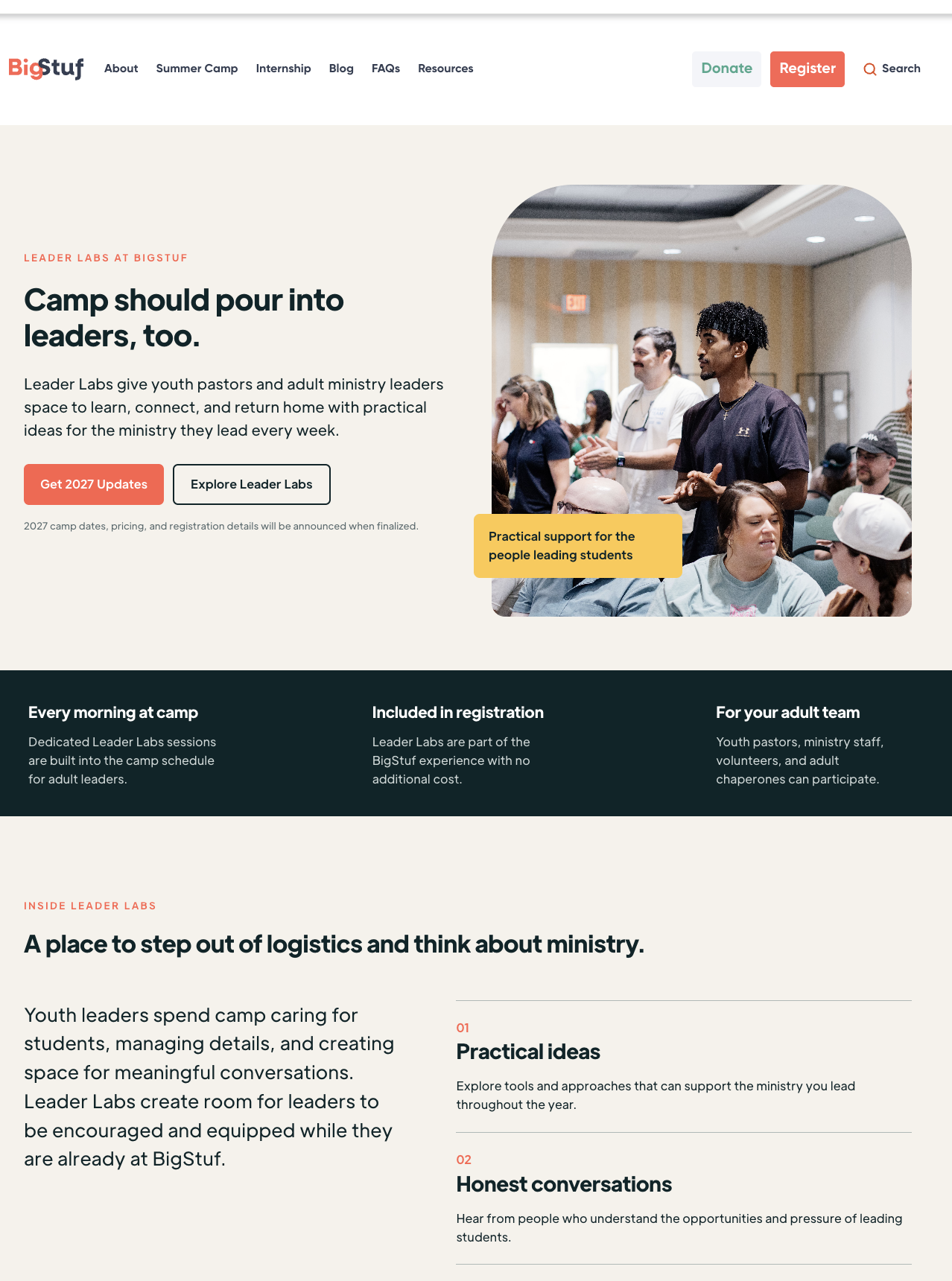
Leader Labs followed with a clearer proposition for youth pastors and adult leaders. The refreshed page replaced a crowded collage with focused photography, practical program details and a stronger path into updates.
Leader Labs page refresh
The updated page replaces the earlier collage with a clearer proposition, stronger photography and useful program detail.
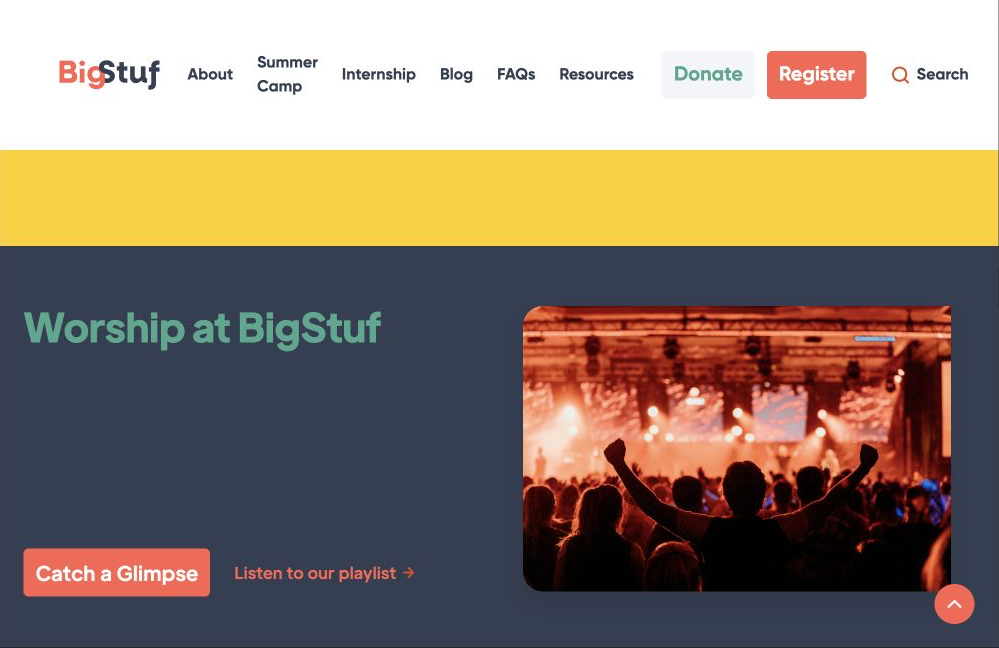
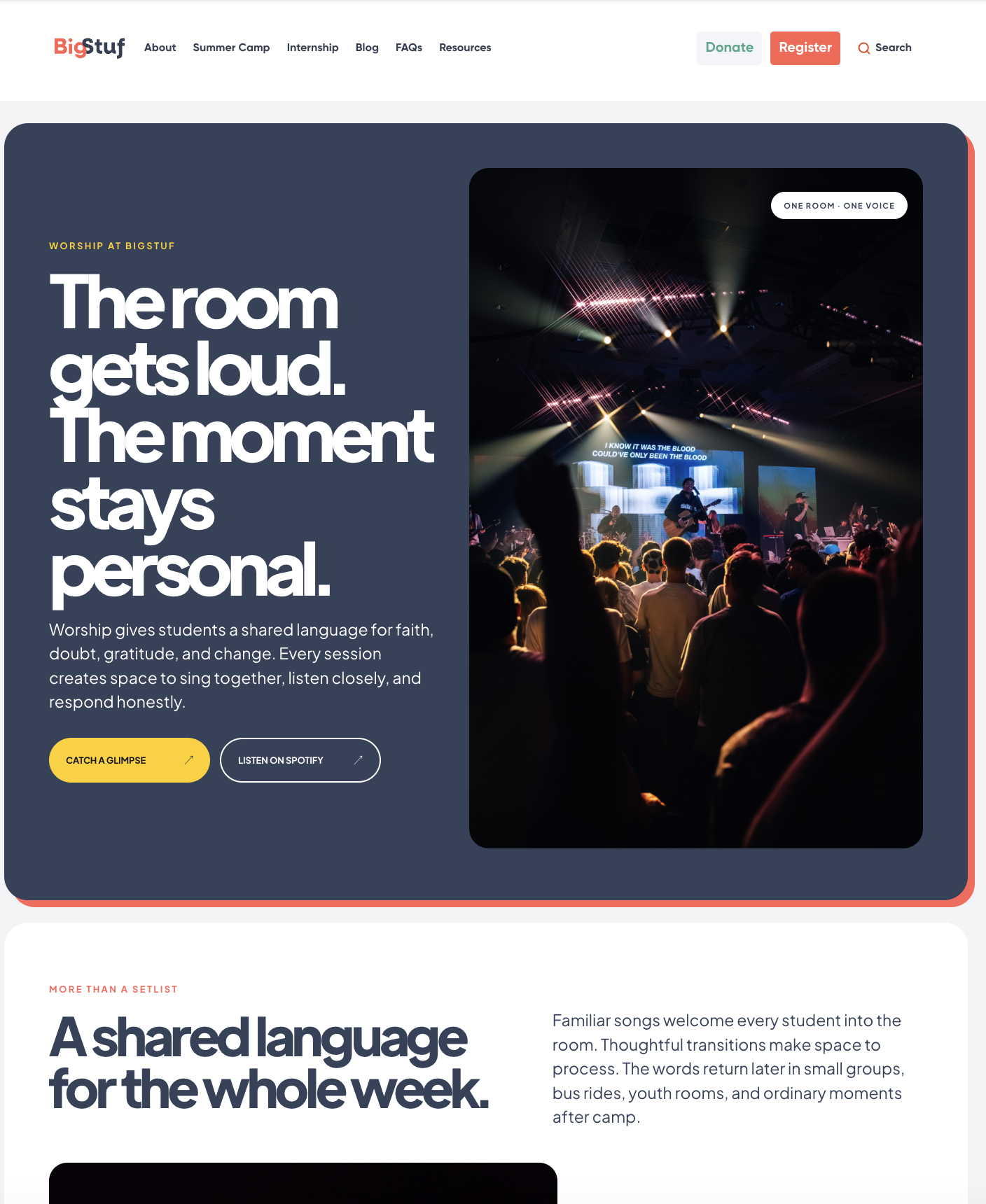
The Worship page used the same system in a more editorial way. One central idea now carries from the opening section into supporting content, imagery and next steps.
Worship page refresh
The revised experience carries one editorial idea from the opening statement into the supporting story below.
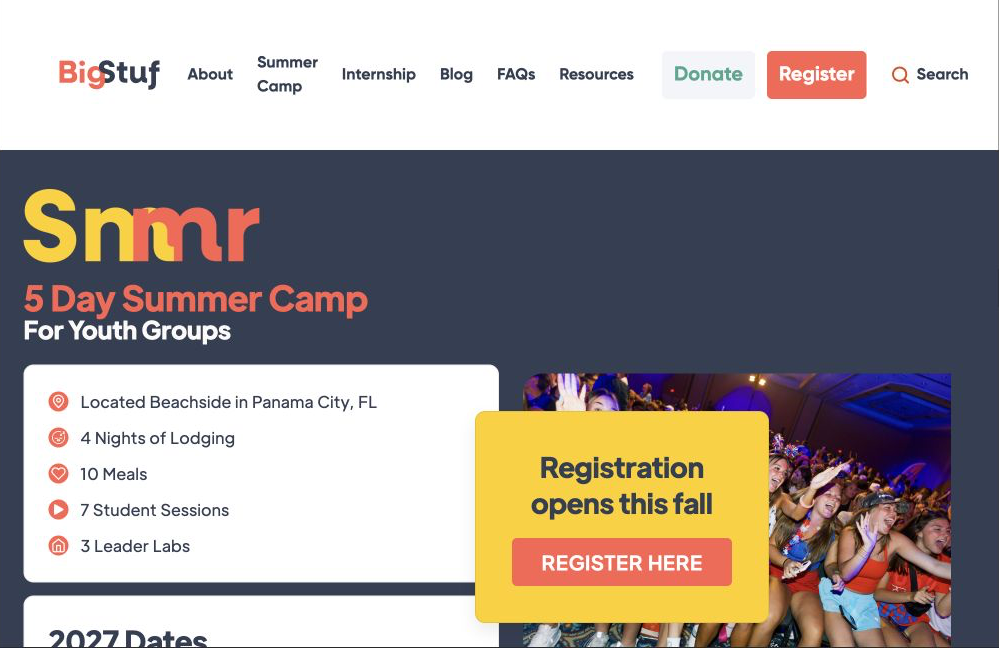
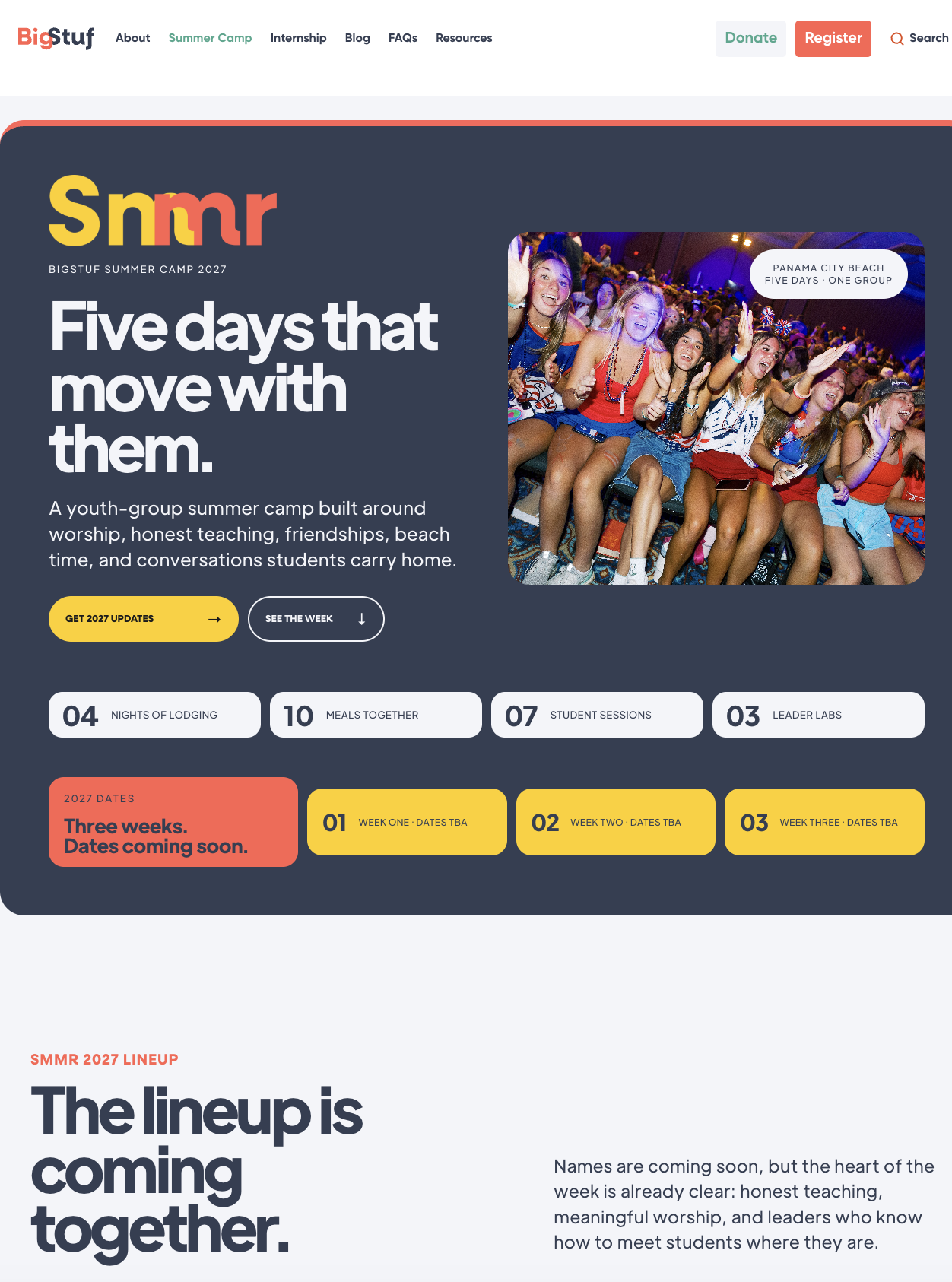
The SMMR page then brought the system together at the broadest program level. It gives first-time visitors a clearer explanation of the experience and carries that hierarchy through planning information, program details and future updates.
SMMR page refresh
The refreshed page now carries its hierarchy through planning details, program information and the next section of the experience.
This was a connected page system designed to support organic search, paid search, email capture and ongoing maintenance together.
Improving the visual system without replacing the brand
BigStuf did not need a new identity. It needed a more disciplined expression of the identity it already had.
The refresh retained the established palette and brand voice while improving typography, spacing, image selection and section hierarchy. Current BigStuf photography replaced generic or repeated imagery where suitable. Dense copy was reorganized into clearer sections without removing important policy or planning information.
Shared headers and footers were standardized across refreshed pages. This created a more consistent experience for visitors and reduced the burden of maintaining repeated page-level navigation.
Mobile behavior received the same attention. Cards, images, text blocks and conversion paths were checked across responsive layouts instead of treating the desktop page as the finished product.
The result is a website that feels more intentional without pretending that every useful asset needed to be rebuilt. The work followed the same connected approach described in FORTUNE Marketing’s digital marketing methodology.
Creating a clearer search architecture
The refresh also addressed how different audiences search for program and group-travel information.
FORTUNE Marketing added or improved page titles, descriptions, canonical URLs, heading structure, internal links and schema where relevant. The work created distinct search journeys for parents, students, youth pastors, church groups, first-time visitors and regional planners.
New regional pages support realistic drive markets including Atlanta, Nashville and Birmingham. These pages use location-specific travel and planning information rather than repeating the same generic city copy.
The sitemap was cleaned so drafts, templates, experiments, obsolete pages and internal utility content would not compete with priority public pages. Redirect and canonical issues were repaired or documented, and refreshed URLs were submitted for recrawling through Google Search Console.
This approach treats search engine optimization as part of the website system rather than a layer of keywords added after the design work is complete.
Building conversion measurement around confirmed actions
A clearer website still needs reliable measurement.
The refresh introduced a centralized BigStuf 2027 Updates signup experience connected to one Mailchimp audience. Source-aware attribution records whether a subscriber arrived through a parent, student, youth-leader, regional or internship journey without fragmenting contacts across disconnected lists.
FORTUNE Marketing also created confirmed-success-only analytics and Google Ads conversion events. A page view, button click, form impression, validation error or abandoned form does not count as a lead. Only a confirmed successful submission enters lead reporting.
That distinction gives paid-media decisions a more reliable foundation. It also prevents the website from appearing more successful simply because someone interacted with a form without completing it.
Early search signals
The current evidence points to stronger search visibility, but the work remains in its measurement phase.
In the recorded year-over-year Search Console comparison, BigStuf’s average organic position improved from 20.7 to 8.7. That represents an approximate 58% improvement in average ranking position.
Several priority non-branded searches also reached page one during the refresh period. Recorded examples include:
christian summer camps for teensat an average position of 8.4;best christian campsat an average position of 7.4;christian teen summer campsat an average position of 9.6.
The refreshed SMMR destination gained five weekly clicks during one recorded comparison even while impressions declined, indicating stronger click efficiency for that page in the measured period.
These signals need careful interpretation. The refresh coincided with content expansion, technical cleanup, paid-media changes and a seasonal transition. FORTUNE Marketing is treating the ranking improvement and page-one access as promising directional evidence, not proof that design alone caused every movement.
The latest complete weekly record did not show sitewide traffic growth. Claiming otherwise would overstate the evidence.
Making the Webflow site easier to maintain
The project also addressed the work visitors never see.
Legacy and backup pages were organized into a dedicated archive structure while preserving live URLs where necessary. Unpublished before versions remain available for comparison and rollback. Experimental concepts stay separate from the active page system.
This gives BigStuf a more maintainable Webflow environment. Current public pages are easier to identify, shared components reduce repeated work and future program updates can be made without reopening the entire website structure.
A strong website-design system should make future changes safer, not create dependence on another complete redesign.
The result: a clearer website built for growth
The BigStuf refresh did not depend on discarding years of useful work. It depended on making better decisions about what to preserve, what to improve and what to remove from the active system.
The refresh delivered:
- a consistent responsive page system;
- clearer journeys for key audiences;
- stronger search intent and internal linking;
- focused landing pages for organic and paid demand;
- one updates audience with source attribution;
- conversion reporting based on confirmed form success;
- a cleaner sitemap and Webflow maintenance environment;
- a practical foundation for future 2027 updates.
For organizations with established brand equity and valuable existing content, a strategic refresh can be the right middle ground. It can improve clarity, search visibility, conversion paths and maintainability without the cost and disruption of rebuilding everything from zero.
When a focused website refresh is the better decision
FORTUNE Marketing works with organizations whose websites contain valuable material but no longer present it clearly. The work can begin with a focused refresh of the pages, search journeys and conversion paths carrying the greatest commercial or organizational value.