

Furniture Ecommerce Marketing: How Design Brands Turn Browsing Into Buying
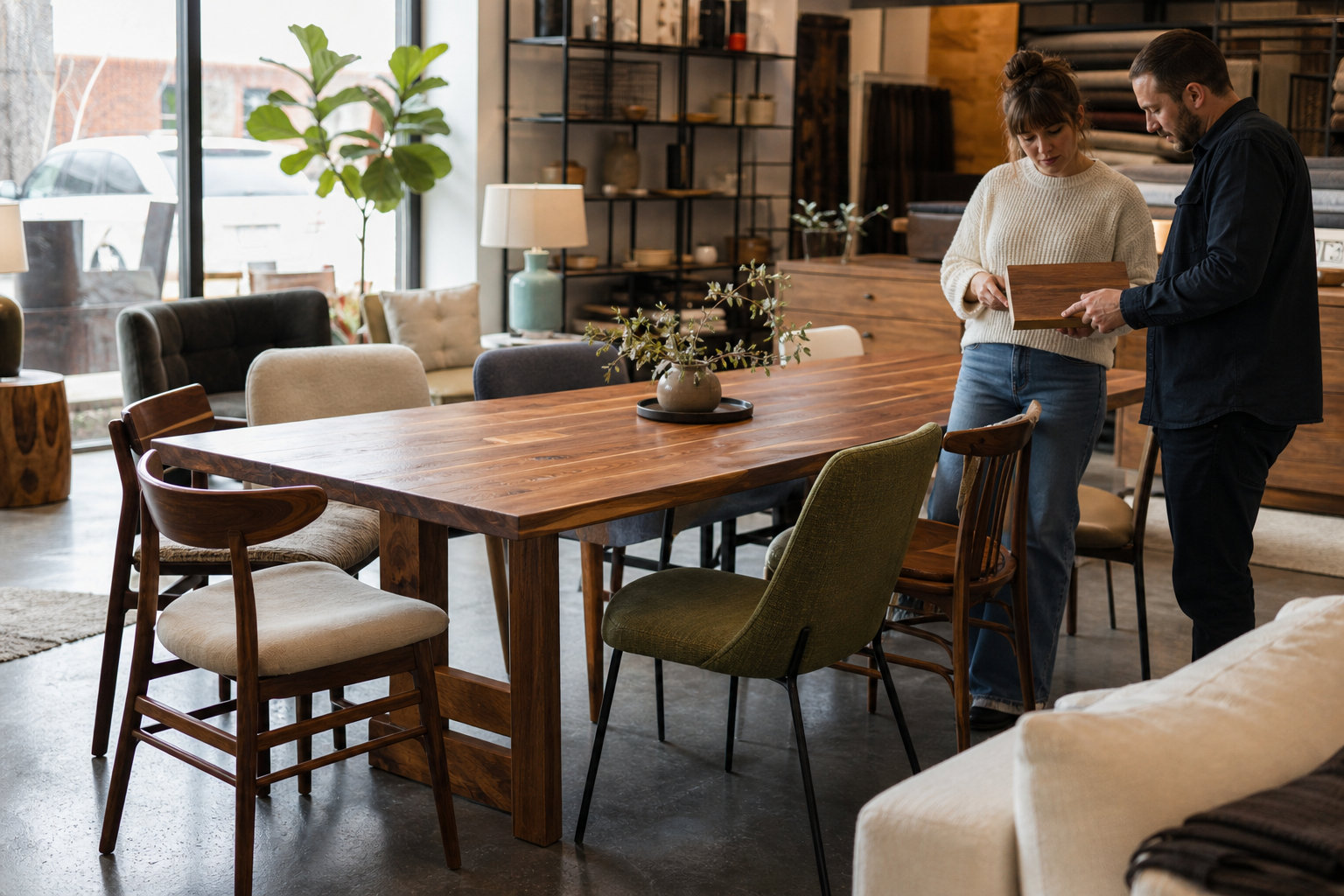
Furniture is one of the hardest categories to sell online. A customer cannot feel the weight of a table, test the angle of a chair or see how a finish changes across the day. They also need to make decisions about scale, delivery, care and price without the reassurance of a showroom.
That makes furniture ecommerce marketing more than a photography exercise. The strongest brands build a digital environment that replaces uncertainty with evidence while protecting the emotional pull of the object.
Sell the Object and the Decision
Most furniture brands are good at presenting the object. Fewer are good at helping someone decide. A campaign image may create desire, but a product page must answer practical questions: Will it fit? How does it arrive? What is the finish really like? Can it handle daily use? What happens if the customer changes their mind?
Map the questions a buyer asks from discovery to delivery. Then assign each question to the right format. Use a room image for proportion, a detail photograph for material, a short video for movement, a diagram for dimensions and concise copy for care and lead time.
Build Product Pages Around Confidence
A high-performing furniture product page should include:
- clear dimensions in familiar units
- material and finish information written in plain language
- photographs from several useful angles
- one image at human scale
- delivery, assembly and return information
- care guidance and warranty details
- swatches or samples when finish variation matters
- related pieces that solve a real styling or functional need
Do not bury these details in accordions with vague labels. Clear information protects a premium brand because it reduces doubt and prevents avoidable service problems.
Create Editorial Content With Commercial Purpose
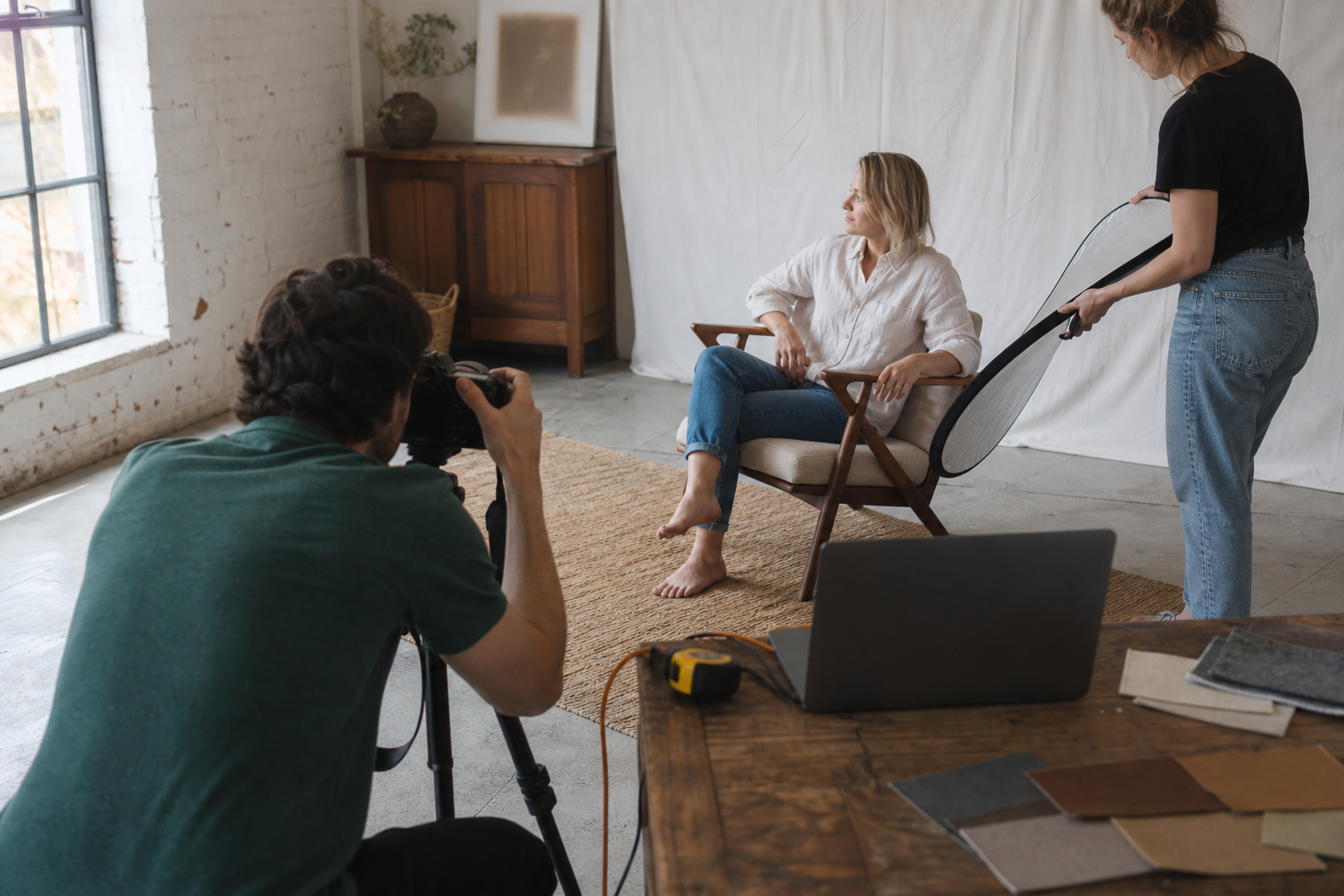
Furniture content becomes repetitive when every post announces a product. Build editorial themes that extend the life of the collection: how a piece was developed, why a joint was chosen, how an apartment was planned around circulation, how materials age, or how a designer thinks about comfort.
This content can live across social, email and the website. A workshop video can become a short reel, a product-page process module and an email about construction. A home visit can support a journal story, several product links and a useful room-planning guide.
Use Search Demand Without Flattening the Brand
People rarely begin with a brand name. They search for categories, materials, dimensions, styles and problems. A search strategy should connect that language to specific collection and editorial pages.
Build category pages for meaningful groups such as solid wood dining tables, modular sofas or small-space desks. Use descriptive URLs, useful introductions and original imagery. Avoid creating dozens of thin pages for every possible wording. Google’s guidance on helpful, people-first content supports the same principle: make pages that genuinely help a customer.
FORTUNE Marketing’s SEO services connect product taxonomy, editorial content and technical improvements without turning a design brand into a keyword catalogue.
Design a Social System Around Use
A beautiful chair on a white background is useful once. A social strategy needs more range. Show the piece in daily life, in production, beside its material references and at different scales. Let designers, makers, retailers and customers explain what they notice.
Use recurring formats such as one-minute material notes, object-in-use studies, designer annotations and small-space planning examples. Repetition builds recognition when the idea stays consistent and the execution remains fresh.
Treat Email as a Showroom, Not a Noticeboard
Email can slow the customer down in a way social media cannot. Use it to introduce a collection in chapters, explain a material decision or show how several pieces work together. Segment trade clients, past buyers and new subscribers because they need different information.
A launch sequence might begin with the idea, continue with process and proportion, then close with availability and delivery. That rhythm creates understanding before asking for a purchase.
Measure More Than Last-Click Sales
Track product-page engagement, sample requests, email signups, saved items, assisted conversions and customer-service questions. Search queries can reveal missing information. High return rates can expose poor photography, unclear dimensions or unrealistic color presentation.
Review performance by product type and content theme. The goal is to learn which proof helps a customer move forward, not simply which image earned the most likes.
Frequently Asked Questions
What is the best marketing channel for a furniture brand?
There is no single channel. Search captures active demand, social creates discovery, email builds consideration and strong product pages convert interest. The system works when those channels share the same information and point of view.
How much photography does a furniture ecommerce site need?
Each product needs enough imagery to explain form, scale, material and use. That usually means a clean view, several details, a human-scale image and at least one lived-in context. More images only help when each one answers a different question.
Build a Digital Experience Worthy of the Product
Good furniture ecommerce marketing keeps desire and clarity in the same frame. It respects the object, but it also respects the customer’s need to make a confident decision.
If your furniture or home brand has strong products but a fragmented digital path, talk with FORTUNE Marketing about building a connected system for discovery, consideration and sales.