

Boutique Hotel Photography: A 24-Hour Shot List
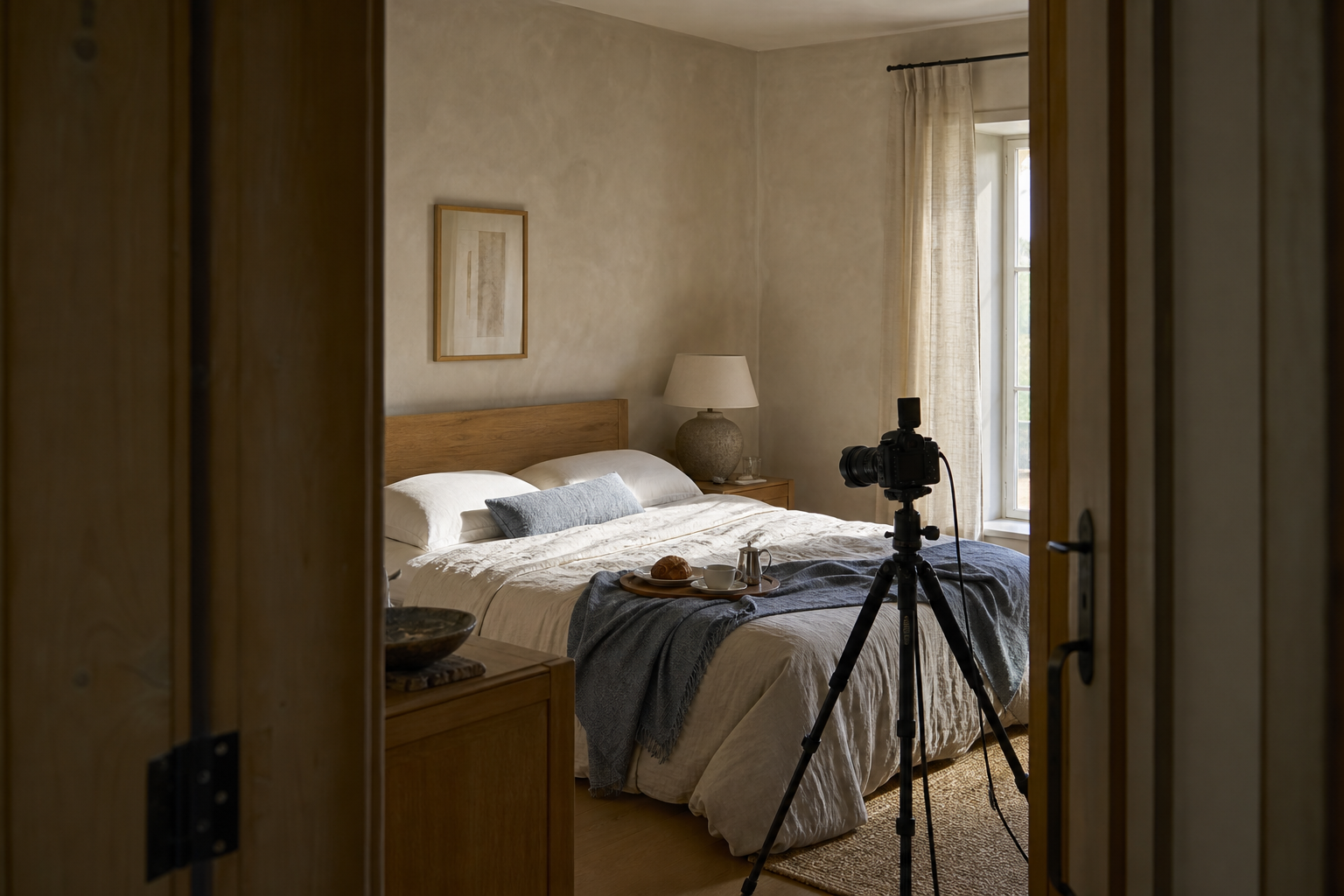
Most hotel photography shoots start with a room list. The stronger ones start with time. A property changes from first light to last drink, and each hour reveals a different reason to stay.
This 24-hour hotel photography shot list helps boutique properties capture more than square footage. It creates a useful image library for room pages, editorial features, social content, email, press, paid ads and direct-booking campaigns.
The principle: document the whole guest rhythm. Show space clearly, then add the light, gestures and local details that make the hotel specific.
What Hotel Photography Must Accomplish
A guest uses photographs to answer two questions at once: “What am I getting?” and “How will it feel?” Wide architectural images answer the first. Editorial moments answer the second.
A complete library needs both. If every frame feels atmospheric, guests may struggle to understand the room. If every frame feels functional, the hotel becomes interchangeable.
Before the Shoot: Build the Brief Around Channels
List where the images will live before the photographer arrives. A booking-engine thumbnail, magazine pitch and vertical social story need different crops and levels of detail.
- Website: wide hero images, complete room views, amenities and clear category differences.
- Social: vertical rituals, small details, human gestures and sequences that can become carousels.
- Press: high-resolution architecture, design details, portraits and factual captions.
- Paid media: simple compositions with one immediate message and room for copy.
- Email: seasonal moments, offers, food, neighborhood and return-worthy rituals.
Coordinate photography and video production in one plan when possible. The same styling and light can create a deeper asset library without duplicating the entire shoot.
6:30 AM: Capture the Hotel Before It Wakes
Start with exteriors, empty public spaces and the cleanest architectural views. Early light softens façades and keeps streets calmer. Inside, photograph the lobby, corridors and staircases before guest movement limits access.
Essential morning frames
- exterior in context, including the street or landscape
- entrance sequence from curb to reception
- wide lobby and one tighter seating vignette
- signature architectural detail
- quiet circulation space that shows scale
8:00 AM: Photograph the Morning Ritual
Breakfast should feel like an experience, not an inventory record. Capture the room before service, then add hands pouring coffee, bread arriving, steam, linen and one complete place setting. Show where the ingredients or traditions connect to the destination.
Photograph a real sequence. A set of five related frames gives your social media team more to work with than five disconnected table shots.
10:00 AM: Make the Guest Rooms Legible
Room photography carries the heaviest booking responsibility. Guests need to understand layout, bed size, natural light, bathroom privacy, storage and the view.
Use this order for every room category
- Photograph a clean wide view from the entrance.
- Show the reverse angle so the layout makes sense.
- Capture the bathroom as a complete space.
- Document the view honestly.
- Add three details that distinguish the category.
- Create one lived-in editorial frame with restrained styling.
Do not hide awkward proportions with an extreme wide-angle lens. A photograph that surprises the guest on arrival may win a click and lose trust.
1:00 PM: Follow the Guest Into the Neighborhood
A boutique hotel often sells access to a place as much as a room. Photograph the walk to a nearby gallery, market, beach, café or architectural landmark. Keep the route realistic and close enough that a guest can use it.
These images support neighborhood guides, local search pages and creator itineraries. They also give the hotel a stronger point of view than a generic city skyline.
4:00 PM: Capture Service Without Staging Theater
Photograph real actions with simple direction: placing a key, preparing a room, arranging flowers, checking a bicycle or setting the bar. Use hands and movement when a full portrait would distract.
If team members appear, obtain clear permission and identify them correctly in the media notes. Real people add trust when the image respects their role.
6:30 PM: Let the Light Change the Property
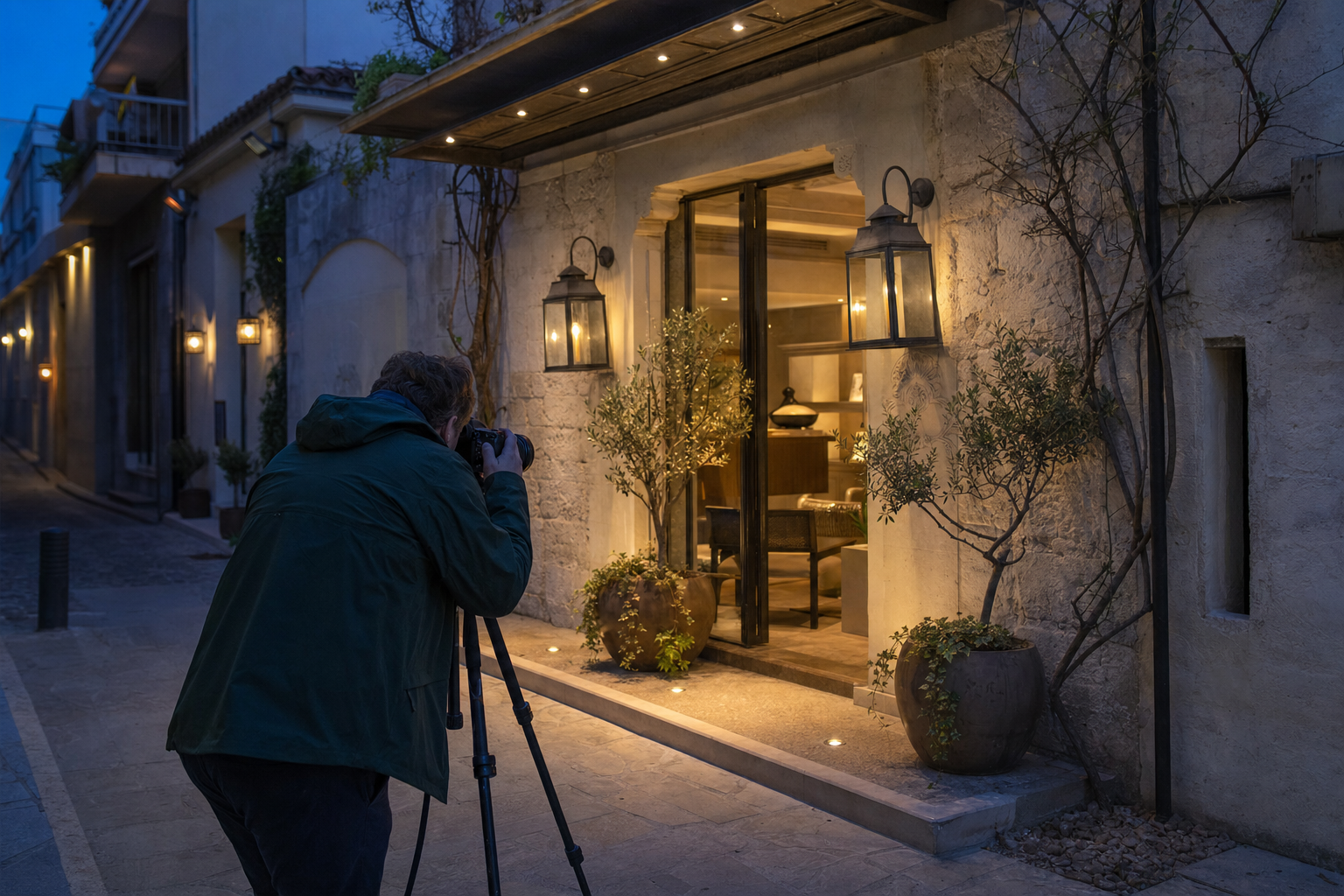
Golden hour and blue hour can transform terraces, pools, restaurants and façades. Plan the sequence in advance because the strongest light may last only minutes.
- terrace or pool in warm side light
- exterior at dusk with interior lights visible
- bar before the crowd arrives
- one table scene with a clear sense of occasion
- night arrival from the guest’s point of view
After the Shoot: Treat Metadata as Part of the Asset
Rename files clearly, record location and subject details, and write alt text that explains the image in context. Google’s image SEO guidance recommends descriptive filenames, useful alt text and images placed near relevant copy.
For every final image, store:
- a short descriptive filename
- alt text that states what the image shows
- a factual caption when context adds value
- location, room category and usage rights
- horizontal, vertical and social-ready crops
Common Hotel Photography Mistakes
- Photographing every room from the same angle.
- Using props that do not belong to the real guest experience.
- Showing atmosphere while hiding layout.
- Ignoring vertical compositions until the end.
- Over-editing windows, skies and material colors.
- Leaving captions, releases and usage rights unresolved.
Frequently Asked Questions
How many images does a boutique hotel need?
A small property often needs 60 to 100 strong final images across rooms, public spaces, food, service, destination and details. The right number depends on room categories and channel needs.
How often should hotel photography be updated?
Refresh the core library after a renovation or major experience change. Add smaller seasonal shoots two to four times a year so social, email and offers remain current.
Should guests appear in the images?
Use people selectively. Human presence can clarify scale and emotion, but the hotel should remain the main character. Secure model releases for every recognizable person.
Photograph the Stay, Not Just the Space
The most useful hotel photography combines evidence and emotion. It shows exactly what guests can expect, then reveals the rhythm that makes this property worth choosing.
If your image library looks beautiful but cannot support a full year of campaigns, contact FORTUNE Marketing to plan a hospitality shoot around the complete guest journey.