
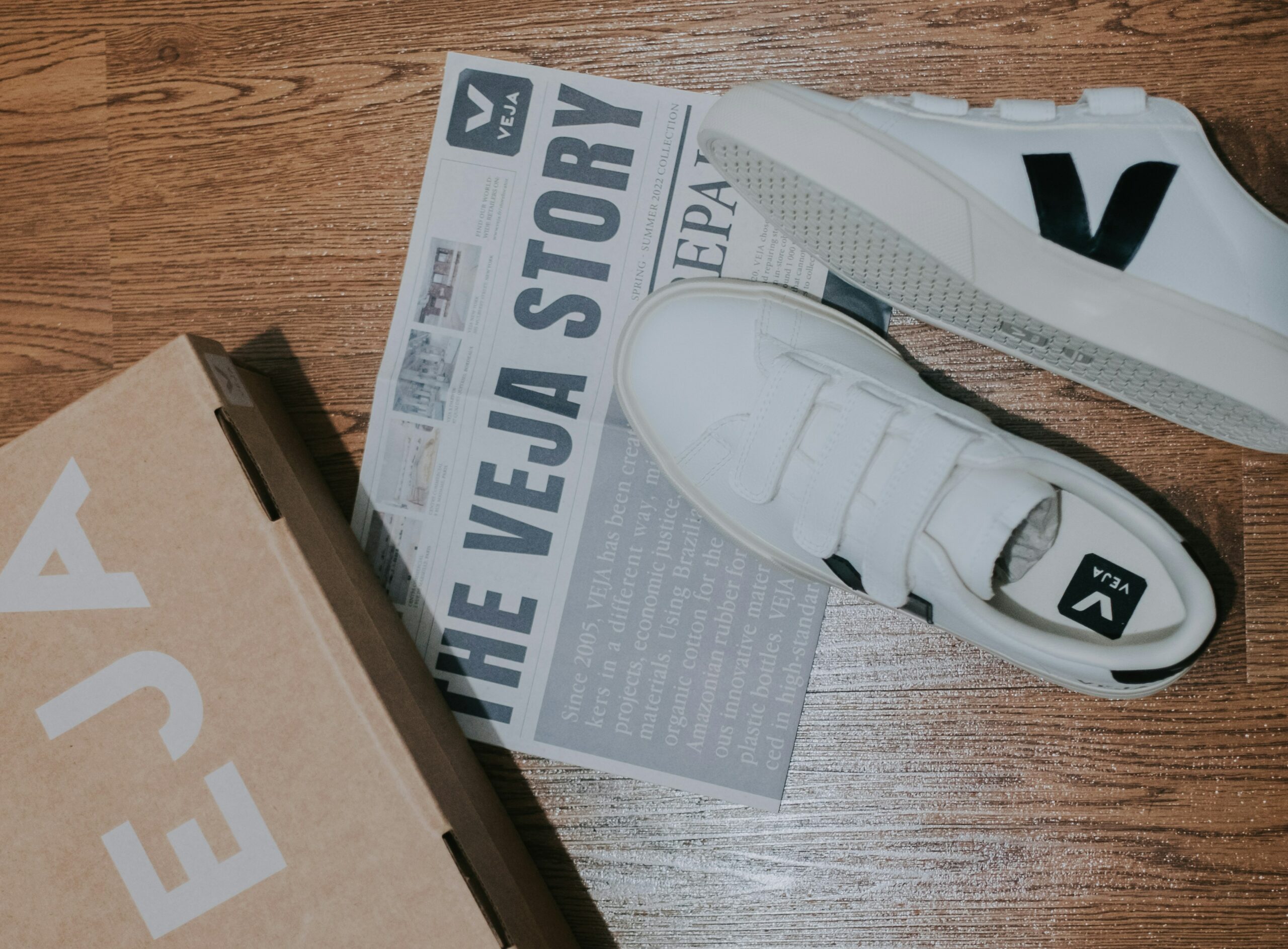
Our earlier VEJA article made a useful observation: the brand carries its production story into the buying experience. The pictured “The VEJA Story” booklet gives a customer something to read alongside the product itself.
The story does not stop when someone reaches the checkout.

Give the brand story something concrete to stand on.
VEJA publishes explanations of its sourcing and production practices, including how it works with producers. It also publishes limitations, such as its use of conventional dyes and materials it does not source itself. These details give readers a way to examine the company’s claims.
For a product brand, the useful lesson is the connection between the object and its explanation. Material choices, manufacturing decisions and care information can appear across product pages, packaging and editorial content. Each should answer a real customer question rather than repeat the same brand statement.
Turn that detail into useful content.
- A product page can explain a material choice.
- A short film can show the people or process behind it.
- Packaging can direct someone to care information or a fuller account online.
The content becomes more specific because it starts with decisions the business has actually made.
This is our marketing interpretation, not evidence that any one part of VEJA’s storytelling caused its commercial growth. The value for other brands is practical: start with information you can support, then decide where it helps a customer most.
Updated October 22, 2026.