

Article content
A photograph can make someone want to stay. The rest of the gallery has to help them decide which room to book.
That distinction changes a boutique hotel photography brief. A striking lounge establishes character. It does not show whether a bedroom has a desk, how the bathroom is arranged or what sits outside the window. A useful shoot covers both, without making the property look larger, quieter or more private than it is.
Here is a room-by-room shot list, with a close look at photographs of Hôtel Les Deux Gares in Paris, designed by Luke Edward Hall and photographed by Benoit Linero.
What does the photograph actually answer?
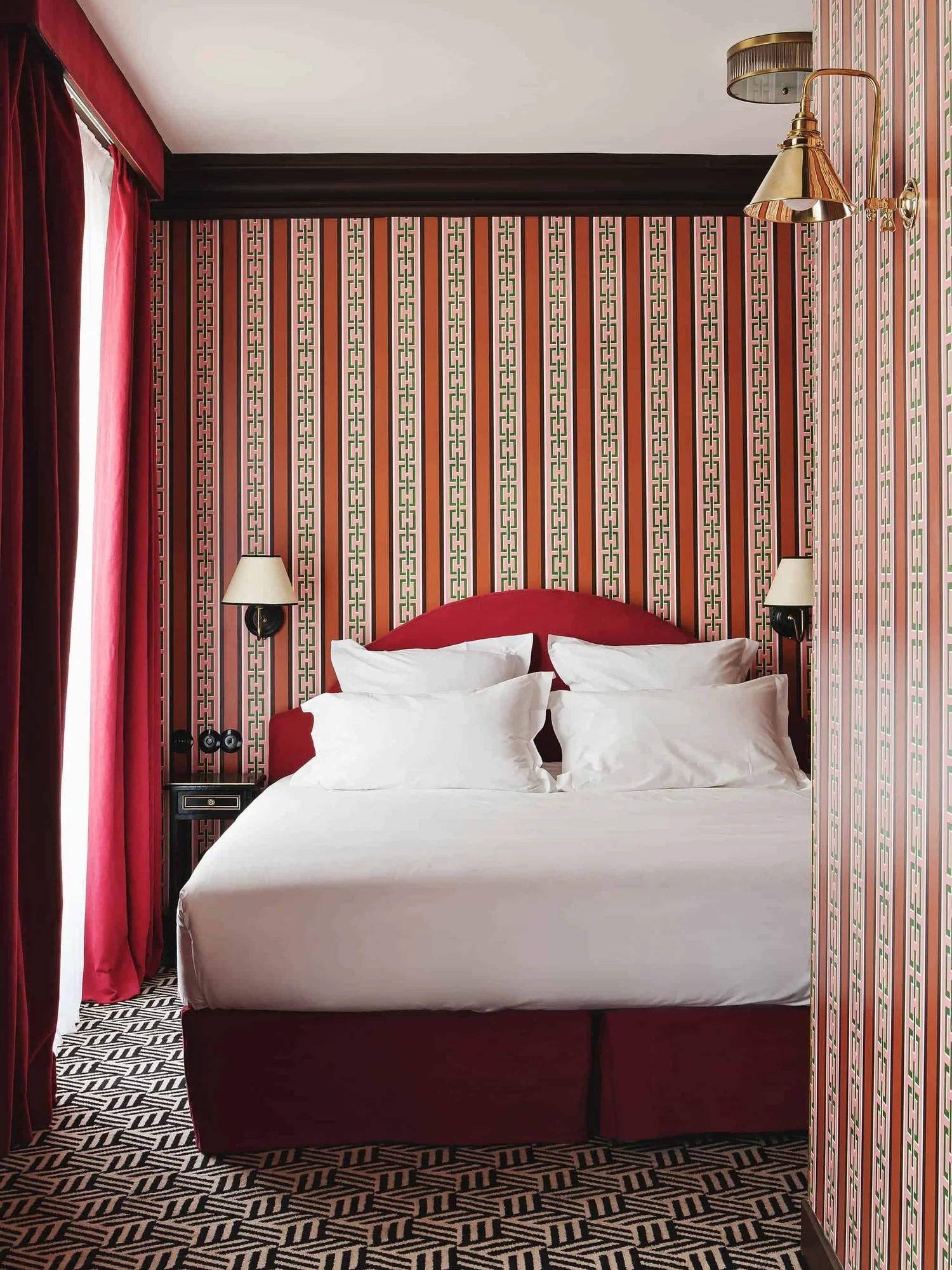
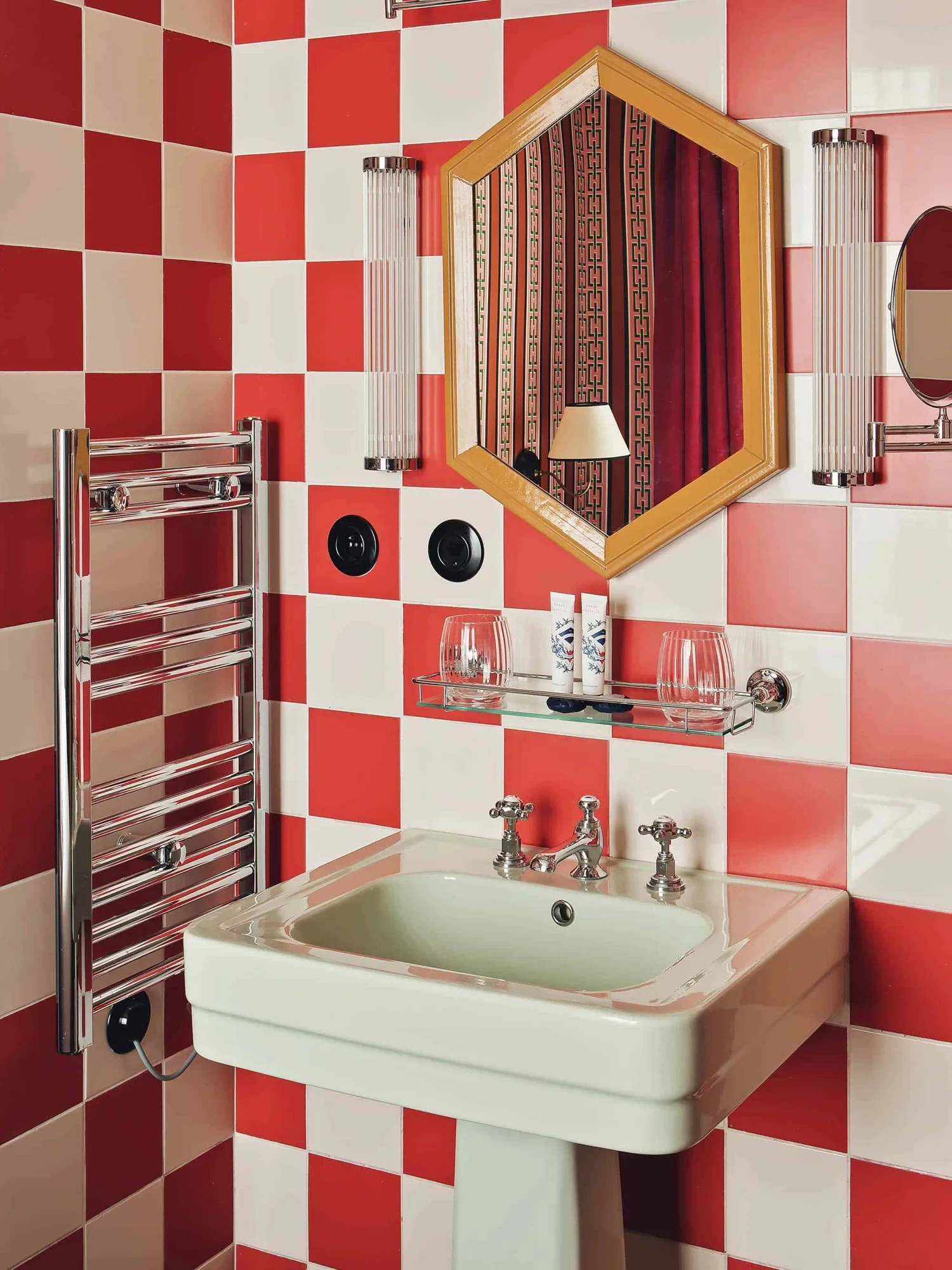
Both photographs: Benoit Linero. Interiors: Luke Edward Hall. View the full project.
The useful test: after admiring the image, what would a prospective guest still need to ask? Put that unanswered question on the shot list. A beautiful detail should add to the room gallery, not stand in for it.
The room-category shot list
Repeat this sequence for each category you sell. A suite photograph should not quietly represent a smaller room. Where views or layouts vary within a category, agree how the gallery and captions will make that clear.
01 Layout
A clear view connecting the bed, furniture and circulation. Keep verticals straight and proportions believable.
02 Reverse angle
The desk, storage, entrance or seating that the first frame leaves out. This is often more useful than another bed photograph.
03 Bathroom
The actual shower or bath, basin and available space. Add a closer frame if a material or fitting deserves attention.
04 Outlook
The view a guest will have from that room. Avoid substituting a rooftop panorama for a courtyard-facing category.
05 Distinctive feature
The terrace, reading corner, joinery or textile that makes this category worth choosing. Photograph what is included.
06 Vertical composition
A deliberate portrait frame for social or mobile placements. Allow space for interface overlays where needed.
Plan around light and access, not a fixed clock
A universal 6:30 a.m. start is not much of a plan. The right window depends on orientation, season, weather and when the hotel can release a room or restaurant. Scout first, then build the running order with housekeeping and the photographer.
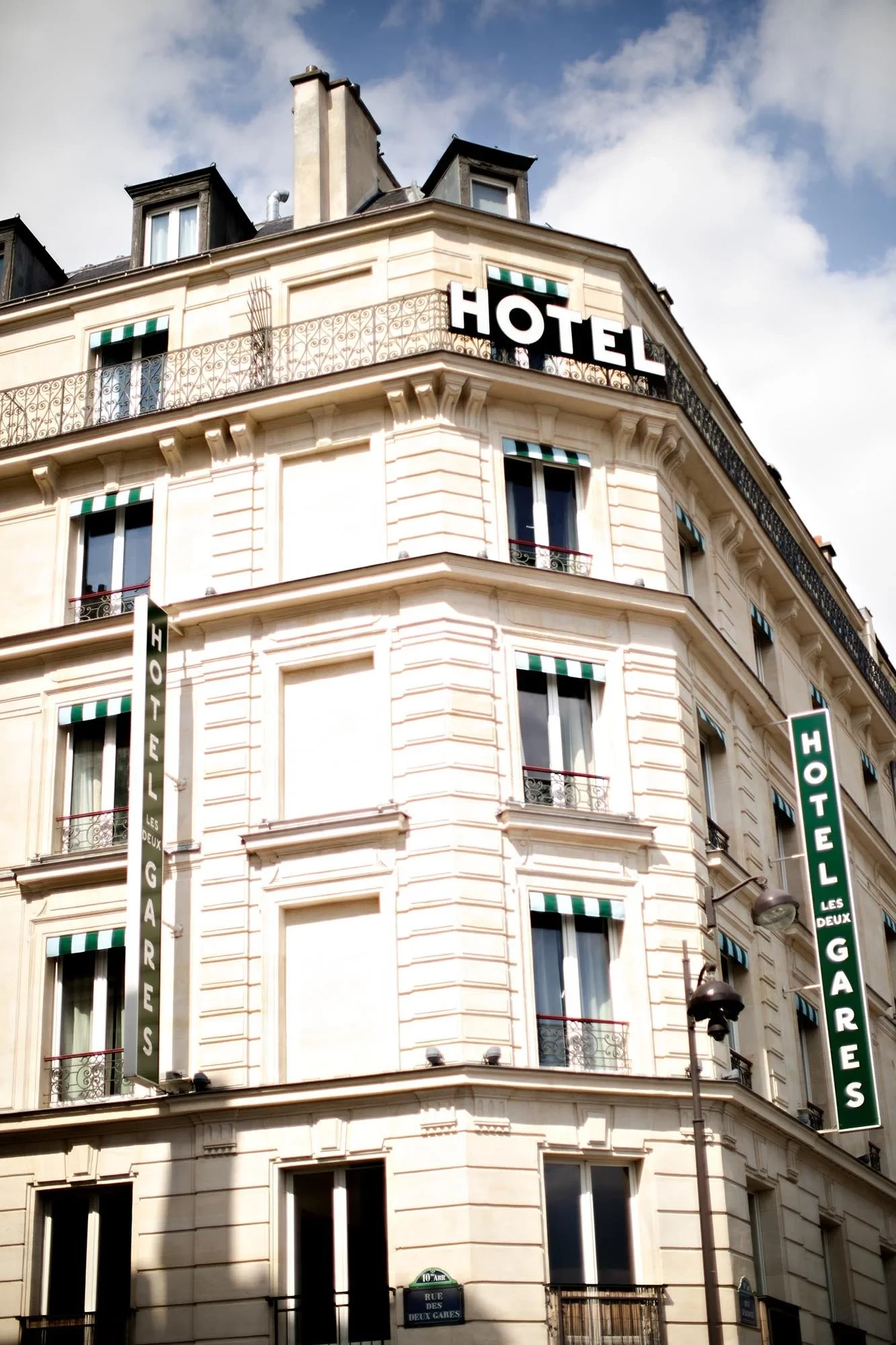
Arrival is part of the brief
Keep the place in the picture.
This daylight exterior communicates the building, entrance and streetside setting. It does a different job from an atmospheric interior.
For your property, note nearby signage, parked vehicles and access restrictions during the scout. Do not promise an empty street or rely on removing real surroundings in post-production.
Before guests arrive or while rooms are released
Photograph the exterior and shared spaces when access is practical. Book specific room categories into the schedule, with time for cleaning, steaming, styling and resetting. Confirm who can approve a room on the day.
When the room has its best natural light
Prioritise the layout and reverse angle, then the bathroom and details. Review reflections, colour and the view through the windows on a larger screen before moving to the next category.
When atmosphere genuinely changes
Add an evening restaurant or terrace frame if it reveals a meaningful part of the stay. Dusk is an option, not a requirement. A well-observed daylight photograph is better than a forced blue-hour image.
The delivery brief is part of the shoot
Decide where the photographs will appear before the photographer packs up. Otherwise the strongest frame may be unusable in the booking engine or crop awkwardly on a phone.
Keep master files separate from web exports. Use descriptive filenames and factual alt text. Google's image SEO guidance covers discoverability; the first job is still to show the right thing clearly.
A six-point check before the shoot
Is the brief ready to send?
Tick what has been agreed. This is a planning checklist, not a performance score. Your selections stay in this page and are not submitted.
How many final photographs should a hotel request?
Count the categories and views you need, then add shared spaces, arrival and channel-specific compositions. There is no useful universal total. Agree a coverage matrix and a realistic delivery range with the photographer rather than asking for an arbitrary number of files.
For a new opening or a library that no longer represents the property, FORTUNE can connect the photography brief to the website and content plan. Tell us about the property.
Cover and project photographs: Benoit Linero, from Luke Edward Hall's Hôtel Les Deux Gares portfolio. Project shown as an editorial reference.